



Dentists and hygienists in 2-to-5 doctor practices spend 45 minutes to over an hour per day on notes, much of it after hours or compressed between appointments. Across three providers, that's roughly 15 hours of documentation labor per week. None of it is billable.
What an AI Scribe Does Chairside
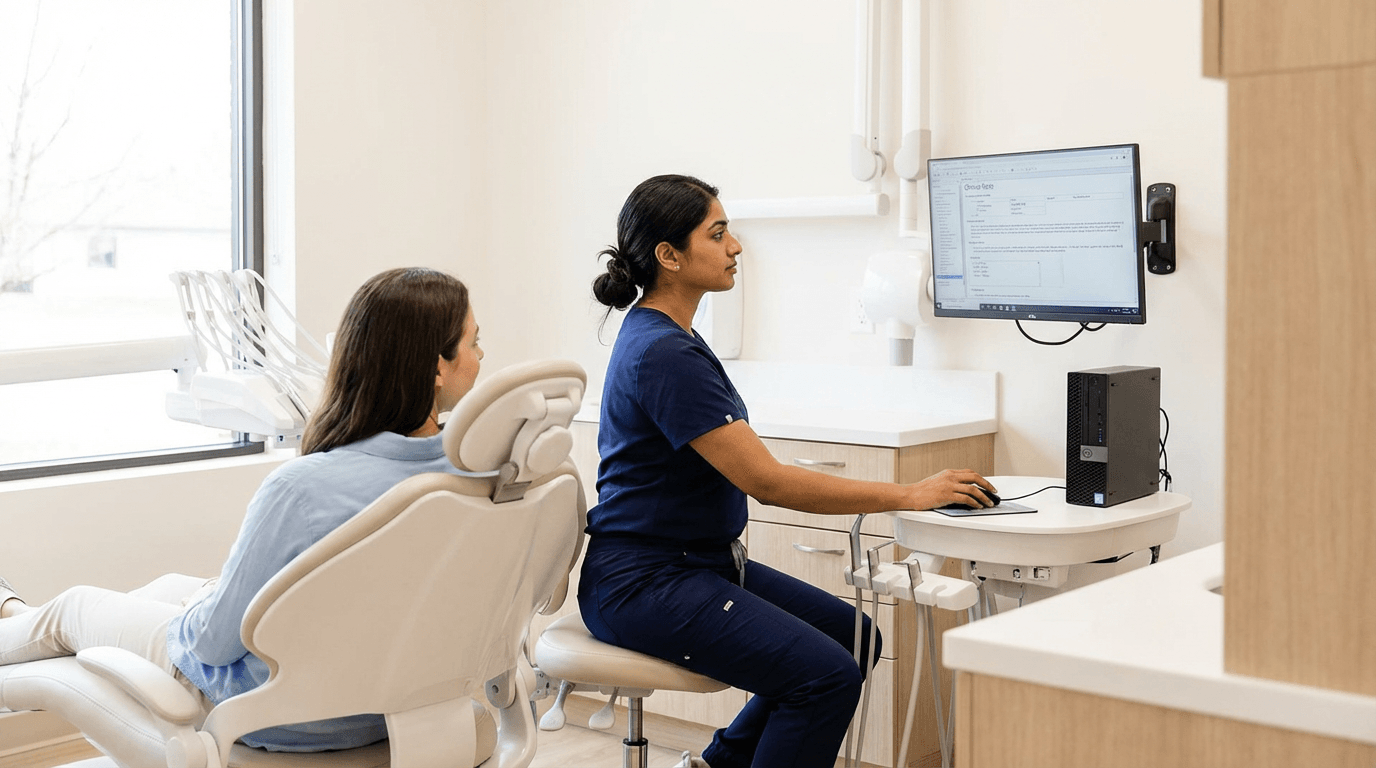
An AI scribe listens to the clinical encounter and drafts the note in real time. The provider finishes the appointment with documentation already started, not a blank field to fill at 6pm.
In a dental context, this means procedure notes, perio charting narratives, and treatment plan summaries generated from what was said chairside. Overjet Voice captures the clinical conversation and produces a structured draft the provider reviews and signs off on, without switching to a separate app or platform.
The Real Cost of Inconsistent Notes
In a multi-provider practice, inconsistent note structure is a liability. When an insurance reviewer reads across multiple providers in the same chart, gaps in structure create friction. Claims slow down. Audits surface. Front office staff chase clarifications before anything goes out.
That exposure compounds over time. A practice with three providers writing notes in three different styles is creating audit risk on every claim that touches more than one provider's documentation.
Editing a Draft Is Faster Than Writing From Scratch
The most common objection to any dental AI scribe is that "AI makes mistakes. Correcting them is just trading one kind of work for another." That perspective misses how review-and-edit workflows function.
Editing a structured draft takes a fraction of the time that writing from a blank field does, even when edits are needed. The cognitive load is different. You're reading and adjusting, not reconstructing from memory. Review-and-edit is faster than dictation or manual entry, even when the draft requires corrections.
Overjet Voice is built around this model. The AI drafts, the clinician reviews. The clinician reviews and approves every note before it goes anywhere.
For practices that want consistent documentation across providers, there's a second benefit: every provider's notes follow the same structure. That consistency is exactly what insurance reviewers and auditors look for when reading across a multi-provider chart.
Overjet Voice is a new standard which allows me to more accurately document my patient care while delivering massive time savings. I'm getting 5+ hours back every work week.
Why a Standalone Scribe App Creates More Work
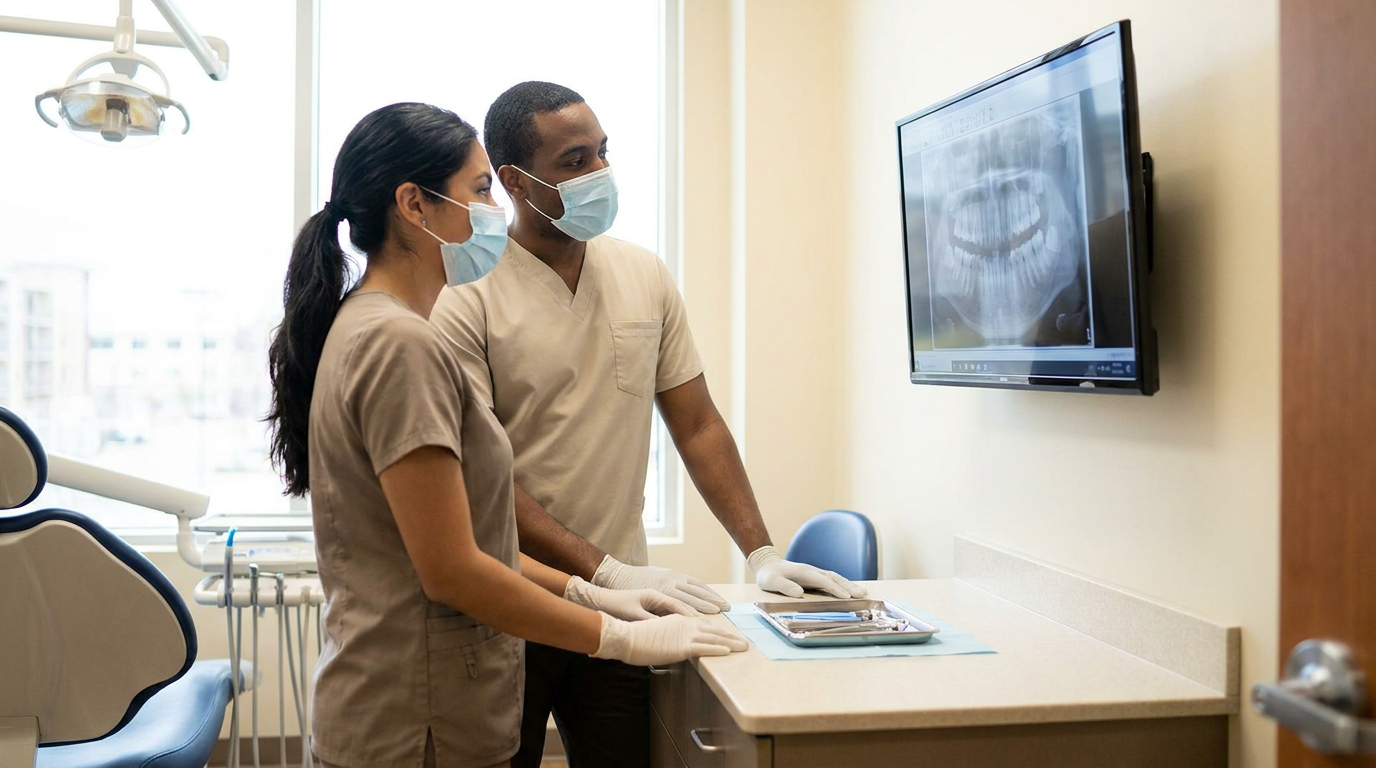
Practices using a separate scribe tool manage two disconnected systems that don't share data. For practices already using Overjet for radiographic analysis, Overjet Voice keeps imaging findings and clinical narratives in the same platform. A provider reviewing a note can see what the AI detected on the x-ray without toggling between tools. That connection matters most during treatment planning conversations and insurance documentation, where reviewers look specifically at the relationship between what was seen on imaging and what was charted.
Practices already using intraoral scanners, CBCT, and AI on x-rays have the pieces in place. Clinical notes should be part of the same system, not bolted on from a separate vendor.
What to Evaluate Before Adopting Any Dental AI Scribe
Dental-specific training matters. A general-purpose scribe AI tool built for medical encounters won't reliably handle perio charting language, CDT code references, or the structure of a hygiene note. Tools built specifically for dental practices handle dental terminology more reliably than general-purpose alternatives adapted for clinical use.
Ask whether the tool integrates with your practice management software or requires manual export and copy-paste. Copy-paste isn't a workflow.
Free AI scribe tools exist, and the subscription cost isn't the relevant number. The relevant numbers are what the tool costs in provider time if drafts require heavy correction, and what it costs in audit risk if notes are inconsistent across providers.
The right dental AI scribe standardizes note structure across your team and connects to the imaging data your practice already generates. If it doesn't, it's solving part of the problem.
See how Overjet Voice fits into your current workflow.
AI Scribe FAQs
Is a free AI scribe worth it for a dental practice?
Free AI scribe tools exist, and the subscription cost isn't the relevant number. The relevant numbers are what the tool costs in provider time if drafts require heavy correction, and what it costs in audit risk if notes are inconsistent across providers.
What should I look for in a dental AI scribe?
Dental-specific training matters. A general-purpose scribe AI tool built for medical encounters won't reliably handle perio charting language, CDT code references, or the structure of a hygiene note. Tools built specifically for dental practices handle dental terminology more reliably than general-purpose alternatives adapted for clinical use. Ask whether the tool integrates with your practice management software or requires manual export and copy-paste. Copy-paste isn't a workflow. The right dental AI scribe standardizes note structure across your team and connects to the imaging data your practice already generates.
Does an AI scribe make mistakes and is it still worth using?
Editing a structured draft takes a fraction of the time that writing from a blank field does, even when edits are needed. The cognitive load is different. You're reading and adjusting, not reconstructing from memory. Review-and-edit is faster than dictation or manual entry, even when the draft requires corrections. The clinician reviews and approves every note before it goes anywhere.