









Updated: September 2026
Dental imaging has moved from film, to 2D digital sensors, to 3D CBCT, and now to AI that analyzes both 2D and 3D images. Each step improved detail and speed; AI adds consistency and real-time decision support. Here's the timeline and where AI fits.
Key takeaways
Film gave way to 2D digital imaging (faster, lower dose), then to 3D CBCT (volumetric detail).
More detail also means more data, which takes time and skill to interpret.
AI overlays analysis on 2D and 3D images: real-time detection, automated measurements, and standardized reads.
Overjet delivers FDA-cleared AI across the dental ecosystem, from practices to DSOs, education, and payers.
Imaging has always been the cornerstone of diagnosis and treatment planning. As the technology has evolved, so has its potential. Today, pairing AI with imaging systems is setting a new standard.
How has dental imaging evolved?
Traditional film radiographs
For years, film X-rays were the standard. They worked for basic assessments but were held back by slow processing, higher radiation, and inconsistent image quality. Interpretation also varied between providers, which made standardization hard.
Digital radiography (2D)
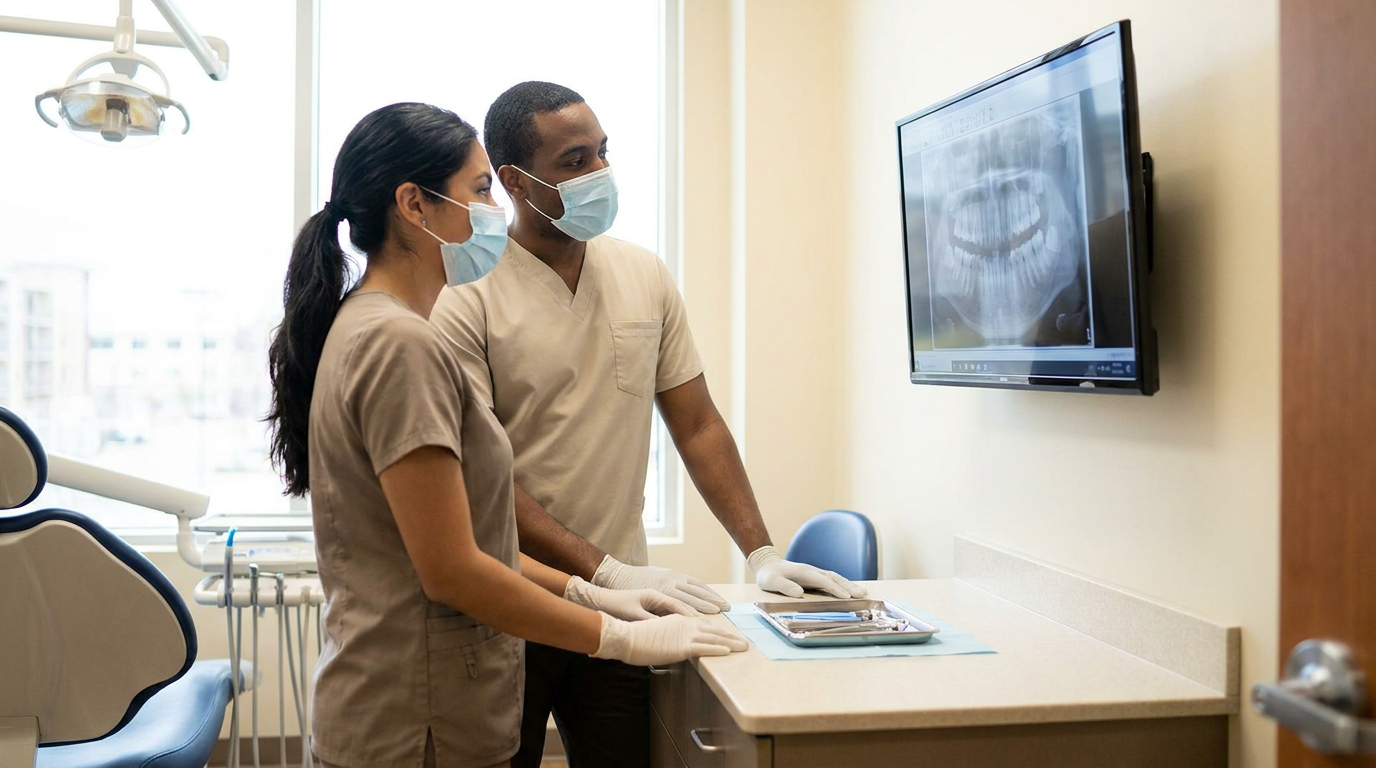
Digital imaging was a major leap: sharper images, lower radiation, and immediate viewing. Still, 2D digital imaging depends heavily on the clinician's subjective read.
3D imaging (CBCT)
Cone beam computed tomography (CBCT) brought volumetric imaging into everyday practice. It shows teeth, bone, nerve pathways, and other structures in detail, which is critical for implants, endodontics, orthodontics, and surgery. But that detail comes with far more data, which takes time and skill to interpret.
AI-powered imaging
Today, AI overlays analysis onto both 2D and 3D images. It supports real-time detection, automated measurements, and standardized decision support.
How does AI improve dental imaging?
AI analyzes X-rays in real time and surfaces clinically relevant findings directly on the image.
Key benefits:
Real-time detection of caries and bone loss: AI flags potential pathology instantly
Automated measurements: Clinically accurate periodontal bone-level assessments
Visual overlays for patient communication: Annotated images help patients understand their diagnosis
Standardized reads across providers: Consistent interpretation for every image
Faster workflows: Quicker, objective analysis reduces chair time
Where does Overjet fit across dentistry?
Overjet delivers value across the full dental ecosystem:
Dental practices
Increase case acceptance with clear, annotated visuals
Improve diagnostic speed and confidence
Strengthen patient communication at the point of care
DSOs
Standardize care across providers and locations
Monitor clinical performance through provider-level dashboards
Support quality assurance, compliance, and scalable training
Dental education
Give students real-time diagnostic feedback
Reinforce consistency in radiographic interpretation
Support evidence-based learning with AI-powered visuals
Dental insurers and payers
Speed claims review with AI-supported radiographic documentation
Reduce manual review time and improve claim accuracy
Identify trends and anomalies across claims data
What's next for dental imaging?
The future of dental imaging isn't just better hardware. It's a unified, intelligent, and scalable ecosystem that supports clinical excellence at every level.
Overjet is building that today: AI that analyzes radiographs in real time, integrates with practice management systems, supports provider education, and improves payer efficiency.
Frequently asked questions
What types of imaging does Overjet support?
How does Overjet help improve case acceptance?
Overjet provides real-time visual overlays that make diagnoses easier for patients to understand, which builds trust and treatment acceptance.
Can Overjet be used in dental schools or academic settings?
Yes. Overjet is used in dental education to reinforce consistent diagnostic training.
What value does Overjet offer dental insurers?
Overjet helps insurers speed claims review with objective, AI-supported documentation.
Is Overjet scalable for DSOs or group practices?
Yes. Overjet offers centralized dashboards, performance tracking, and consistent diagnostic support across locations.
See Overjet's Dental AI Technology in Action