





Updated: August 2026
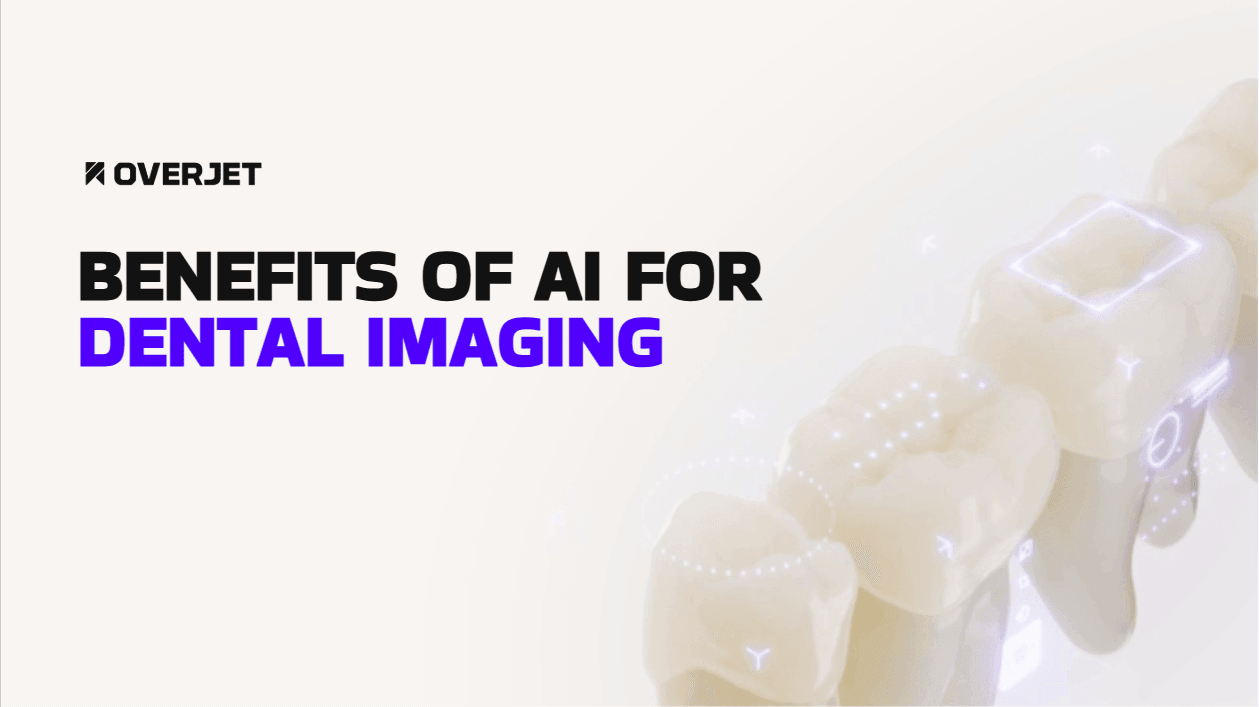
AI for dental imaging layers automated analysis on top of your digital radiographs. It flags findings like caries and bone loss in real time, applies the same standard to every image, and gives patients a clear visual of what needs treatment. The benefits fall into five areas, below.
Key takeaways
AI improves diagnostic accuracy and consistency by analyzing every radiograph the same way.
It speeds up workflows, delivering findings in real time so visits are shorter and more productive.
Visual overlays help patients understand their condition, which improves case acceptance.
It standardizes care across providers and locations and supports earlier intervention.
Imaging is the foundation of accurate diagnosis and treatment planning. But reading radiographs by hand can be slow, inconsistent, and prone to error. Dental AI changes how providers interpret images, talk with patients, and grow the practice.
Greater diagnostic accuracy
With dental radiographs, interpretation is everything. Even skilled clinicians can miss subtle signs of pathology due to fatigue, distraction, or differences in experience.
AI-powered imaging tools analyze radiographs with strong consistency, using algorithms trained on millions of annotated images. They don't get tired or overlook patterns; they evaluate each image with the same detail every time. As a result, conditions like early caries, bone-level changes, and early periodontal disease can be caught sooner and more accurately.
Clinical benefits:
Earlier detection of disease, often before it's symptomatic or needs more invasive treatment
Standardized diagnostics across providers, improving consistency from solo practices to large DSOs
Greater confidence, which supports better treatment planning and case presentation
Overjet is FDA-cleared to detect and outline caries (Caries Assist, K212519/K222746) and to measure alveolar bone level (Dental Assist, K210187) on radiographs.
Faster, more efficient workflows
In a busy practice, efficiency matters. AI-powered imaging analyzes images automatically and in real time, so clinicians can spot caries, bone loss, and other findings instantly, without examining each radiograph frame by frame.
Clinical benefits:
Less chair time by speeding up diagnosis
Same-day diagnosis and treatment planning, for a better patient experience
More time for patient education, rather than backend interpretation
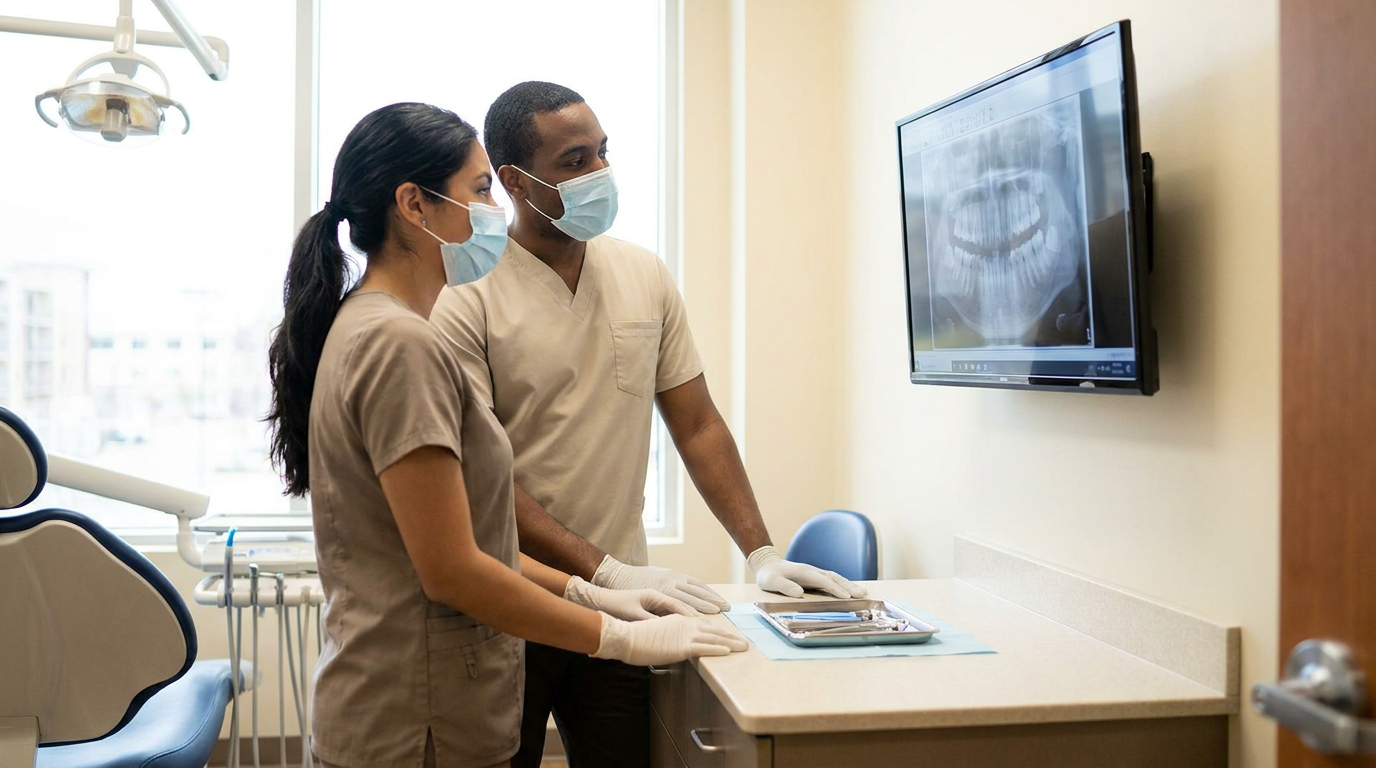
Overjet in action: Overjet integrates with your existing imaging systems and delivers real-time, AI-powered annotations and measurements directly on the radiograph.
Better patient understanding and trust
For many patients, radiographs are confusing. Dental AI changes that.
By enhancing radiographs with AI-generated visuals, patients get clear evidence of their dental conditions. Instead of relying on words alone, dentists can use annotated images that highlight areas of concern, like caries or bone loss, with precision.
When patients see exactly where and why treatment is needed, they're more likely to trust the diagnosis and feel confident about the care.
Clinical benefits:
Higher case acceptance from better understanding of the findings
Clearer, more engaging consultations, with less need for follow-up explanation
More involved patients who feel part of their treatment decisions
Standardized care across providers and locations
Keeping care consistent across providers and locations is hard, especially for growing DSOs and group practices.
Dental AI brings a uniform, objective approach to radiograph interpretation. Every image is analyzed with the same algorithms and clinical criteria, which removes subjective variability and supports consistent care.
Clinical benefits:
Consistent diagnostic outcomes, regardless of provider or location
Better quality control, making internal standards easier to maintain
Stronger brand trust, as patients get the same level of care everywhere
Better outcomes through early intervention
Early detection is one of the most powerful tools in dentistry. AI-powered tools like Overjet can detect subtle signs of decay, bone loss, and other conditions that may not be obvious to the eye.
Clinical benefits:
Slows disease progression through early, targeted treatment
Improves long-term oral health, reducing the need for costly restorative work
Supports minimally invasive dentistry, in line with modern care standards
Overjet's real-world results: Practices using Overjet report meaningful gains in case acceptance, production, and patient outcomes. AI-generated visuals improve diagnostic accuracy and help patients see the value of timely treatment.
The bottom line: dental imaging, reimagined with Overjet
Dental AI isn't a trend; it's the new standard. With Overjet, providers gain a strong ally in diagnostic precision, efficiency, and patient engagement. Whether you're a solo practice or part of a growing DSO, the benefits of AI in dental imaging are too significant to ignore.
Frequently asked questions
1. How does dental AI work with X-rays?
Dental AI analyzes digital radiographs in real time, identifying findings like caries or bone loss and displaying them visually on the image.
2. Is AI imaging accurate?
Yes. Overjet is FDA-cleared to detect caries (Caries Assist, K212519/K222746) and measure alveolar bone level (Dental Assist, K210187), and its findings are clinically validated.
3. Does AI imaging slow down the workflow?
No. It speeds up workflows by delivering instant analysis and reducing time spent reviewing radiographs by hand.
4. Can Overjet integrate with my existing imaging software?
Yes. Overjet integrates with most major imaging and practice management systems.
5. How does AI help with patient case acceptance?
By giving patients clear, visual evidence of clinical issues, AI helps them understand their condition, which builds trust and acceptance.
See AI in dental imaging for yourself