







Updated: August 2026
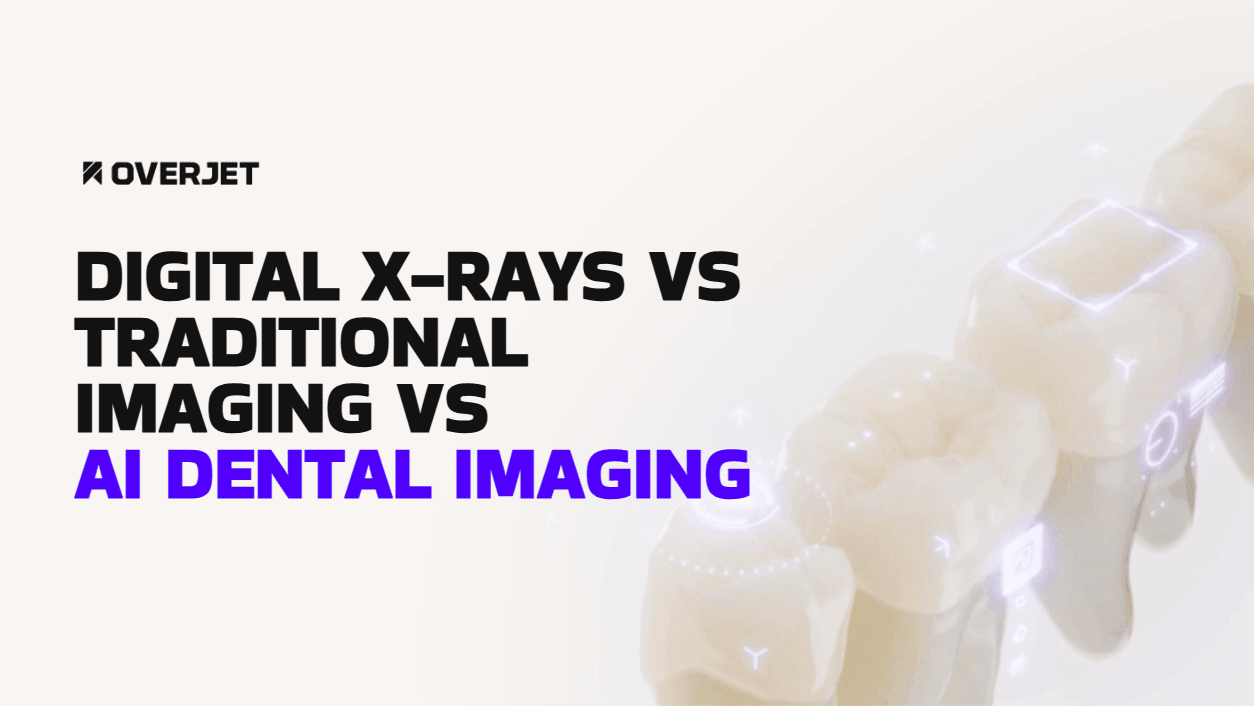
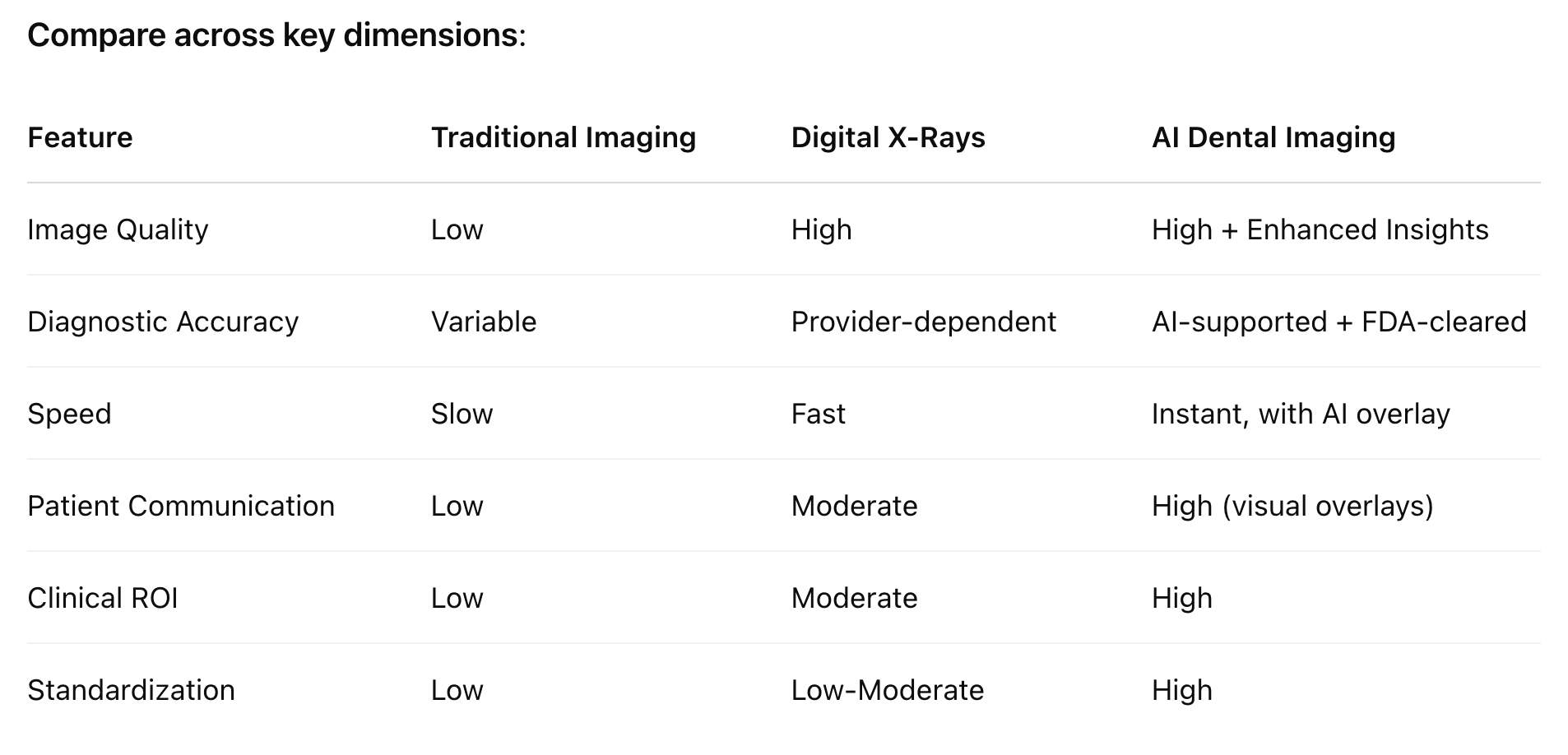
For most modern practices, the best choice is AI dental imaging. It does not replace your X-rays; it adds automatic, consistent analysis on top of the digital images you already capture. Below is how the three approaches compare, and where each one fits.
Dental imaging has advanced quickly: from film developed in darkrooms, to digital sensors, to AI-powered analysis delivered in seconds. As the technology keeps improving, more dentists are asking which type of imaging delivers the most value today.
Key takeaways
Traditional (film) imaging is slow, harder to store, and uses more radiation. It is largely obsolete.
Digital X-rays are faster, clearer, and safer, but they still depend on each clinician's interpretation, so accuracy can vary.
AI dental imaging adds automatic, consistent analysis on top of digital X-rays, flagging findings like caries and bone loss in real time.
Overjet is FDA-cleared to detect caries (Caries Assist, K212519/K222746) and measure alveolar bone level (Dental Assist, K210187) on radiographs.
See AI Dental Imaging in Action
What is traditional film-based dental imaging?
For decades, dental imaging meant film-based radiography, and it was considered the gold standard. But as practices came to value speed, accuracy, and efficiency, film began to show its limits.
Film X-rays had to be processed by hand in a darkroom. That added time to every appointment and left room for human error. Film is also static, so it is hard to adjust brightness or contrast. The result was often lower image quality and less diagnostic confidence.
Storage was another problem. Without digital archives, practices kept physical files that took up space and were easy to misplace. Film also tended to require more radiation than today's digital systems.
Key limitations of traditional imaging
Long processing times that slow appointments and clinical decisions
Lower image quality, with little room for enhancement or magnification
Manual storage, which makes records hard to find or share
Higher radiation exposure than modern digital systems
Film played a foundational role in dentistry, but it is now largely obsolete for fast-paced, technology-driven practices.
How do digital X-rays improve on film?
Digital radiography was a major step forward. Replacing film with digital sensors gave practices real gains in speed, efficiency, and image clarity.
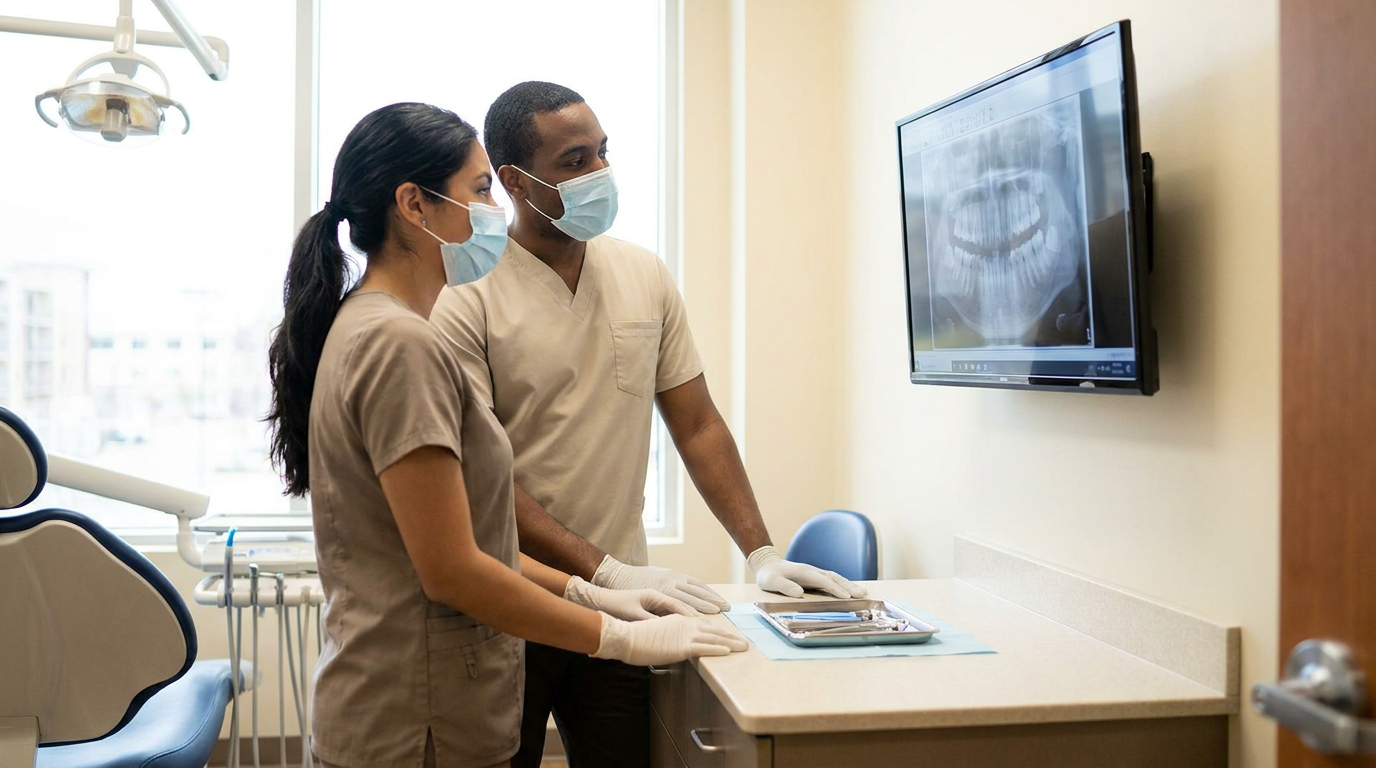
Digital images are also easier to work with. You can zoom, enhance, and adjust contrast, which film cannot do. That helps dentists diagnose more accurately, and it makes it easier to show patients what you are seeing. Digital systems also use less radiation, so they are safer for patients and staff.
Key advantages of digital X-rays
Faster capture and display, for quicker diagnosis
Lower radiation exposure, for safer visits
Easy electronic storage and retrieval, for simpler records
Image tools for zooming, contrast adjustments, and annotations
There is still one limit: digital X-rays depend entirely on the clinician's read. Accuracy can vary from provider to provider, which leads to inconsistent treatment recommendations.
What is AI dental imaging?
AI dental imaging builds on digital X-rays. It layers intelligent software onto the images so dentists get faster, more consistent, data-backed insights.
Rather than relying on a single clinician's judgment, AI analyzes radiographs in real time and flags areas of concern such as caries and bone loss. These tools are trained on millions of images and can surface patterns that are easy to miss by eye. The dentist still makes the diagnosis; the AI makes sure less gets overlooked.
Key benefits of AI dental imaging
Real-time detection of caries, bone-level changes, and other conditions
Consistent, objective analysis across every provider and location
Visual overlays that aid interpretation and patient education
Provider performance insights that support quality control and compliance
Why is Overjet a leader in AI dental imaging?
Overjet is FDA-cleared to detect and outline caries (Caries Assist, K212519/K222746) and to measure alveolar bone level (Dental Assist, K210187) on radiographs. What stands out is the real-time, actionable insight it delivers during routine imaging.
Why practices choose Overjet
Instant AI-powered overlays on bitewings and periapicals
Objective, data-backed insights that support diagnostic confidence
Direct integration with your existing software stack
Trusted by top DSOs and private practices across the U.S.
10-20% increase in case acceptance, driven by clearer patient communication
Which imaging option should you choose?
Traditional and digital imaging were both important milestones, but AI-powered imaging is where dentistry is headed. It pairs the speed of digital radiography with consistent, objective analysis, which helps providers improve outcomes, work more efficiently, and build patient trust. For most practices, that makes AI dental imaging the strongest long-term choice.
See AI Dental Imaging in action
Frequently asked questions
What's the difference between digital X-rays and AI dental imaging?
Digital X-rays capture the image. AI dental imaging adds analysis on top, detecting findings, aiding interpretation, and improving consistency.
Is AI imaging safe and accurate?
Yes. Overjet is FDA-cleared to detect caries (Caries Assist, K212519/K222746) and measure alveolar bone level (Dental Assist, K210187), so it meets clinical safety and accuracy standards.
Do I need to replace my existing imaging system to use AI?
No. Overjet integrates with most major digital imaging and practice management systems, so there's no need to replace your setup.
How does AI imaging improve patient communication?
AI overlays give patients a clear visual of decay and bone loss. That helps them understand their condition and builds trust in your recommendations.
Is AI dental imaging only for large DSOs?
No. Overjet supports solo practices, group practices, and large DSOs, and it scales to deliver measurable ROI at any size.