








You learned the caries definition in your first year of dental school, but the term gets used loosely in daily practice. "Caries," "cavity," and "decay" get treated as synonyms, but the difference is important. Getting the language right is the first step toward catching disease earlier, and new tools are changing how early that can happen.
Caries definition: what the term actually means
Dental caries is a chronic, bacteria-driven disease that demineralizes and progressively destroys the hard tissues of the tooth: enamel, dentin, and cementum. That is the clinical way to define caries.
The simplest way to put the dental caries meaning: caries is the disease process, and a cavity is the end result. Acid-producing bacteria in plaque metabolize fermentable carbohydrates, the acid pulls minerals out of the tooth surface, and repeated demineralization breaks the surface down into a lesion. So when patients ask "what are caries," the answer is that they are an active, largely preventable infection, not just a hole that appeared overnight.
This matters because caries dental disease is one of the most common conditions on the planet. According to the World Health Organization, untreated caries in permanent teeth is the single most widespread health condition globally.
How caries develop
Caries move through recognizable stages, and each one changes what you can do about it:
Initial demineralization. The enamel loses minerals but stays intact. This is the white-spot lesion, and it can remineralize with fluoride and behavior change.
Enamel breakdown. Continued acid attack breaks the surface. Once cavitation starts, the lesion no longer reverses on its own.
Dentin involvement. Decay reaches the softer dentin and progresses faster, often with sensitivity.
Pulp involvement. Bacteria reach the pulp, which typically means pain, possible infection, and more invasive treatment.
The earlier a lesion is caught, the more conservative the treatment. A remineralized white spot costs the patient nothing invasive. A lesion that reaches the pulp can lead to a root canal.
How dentists detect caries
Most practices rely on three methods, and each has limits.
Visual and tactile exam. The trained eye and explorer catch obvious lesions, but early interproximal decay hides between teeth where you cannot see it directly.
Radiographs. Bitewing and periapical X-rays reveal interproximal and recurrent caries the clinical exam misses. The catch is that reading radiographs is subjective. Two clinicians can look at the same bitewing and reach different conclusions, and eye fatigue at the end of a long day makes small lesions easy to miss.
Adjunctive tools. Transillumination and laser fluorescence add data points, but they do not resolve the core problem of inconsistent radiographic interpretation.
A lesion caught on one provider's read but missed on another's is the kind of variability that erodes patient trust and leads to bigger problems later.
How AI changes early caries detection
This is where AI-powered radiograph analysis is reshaping the workflow. Instead of replacing your clinical judgment, it gives you an objective second read on every image.
Overjet Vision AI analyzes bitewing and periapical radiographs to detect and outline caries directly on the X-ray, so you and your patient see the same objective finding. It does not diagnose. It surfaces areas of concern and quantifies them, and you make the clinical call.
The evidence is what sets it apart. Overjet is FDA-cleared for caries detection, and it is the only company with FDA clearance for both caries detection and bone level quantification. In Overjet's own findings, 100% of dentists found more caries when using AI. For a newer practitioner still building diagnostic confidence, or a hygienist warming up the room before the exam, that overlay is a meaningful backstop.
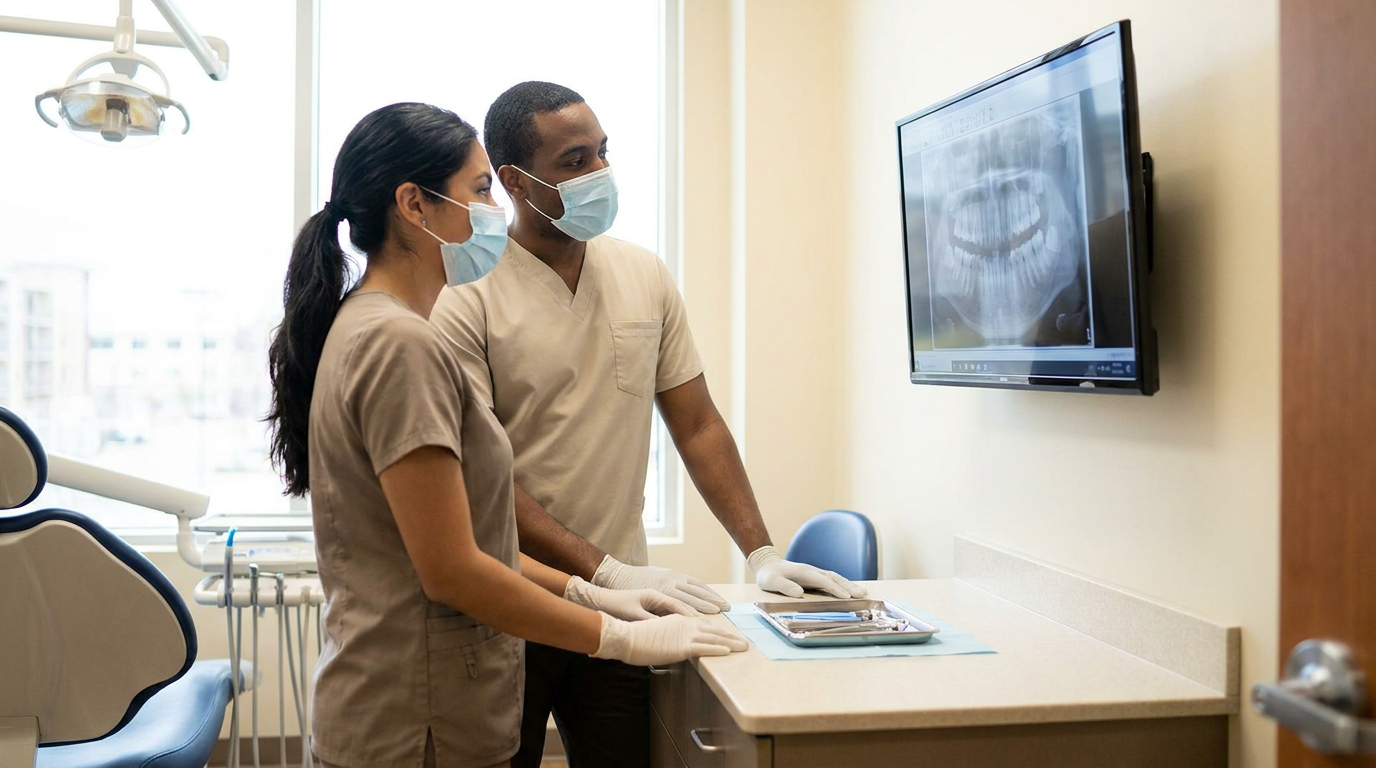
It also changes the patient conversation. When a lesion is highlighted in color on the screen, "you have decay here" stops being your opinion and becomes something the patient can see. That is the difference between a treatment plan a patient questions and one they accept.
Caries FAQ
What is the difference between caries and a cavity?
Caries is the disease process of demineralization. A cavity is the physical hole it produces once the tooth surface breaks down.
Are caries reversible?
Early demineralization (white-spot lesions) can remineralize with fluoride and behavior change. Once the surface cavitates, the lesion needs restorative treatment.
Can AI diagnose caries?
No. AI detects and outlines suspected caries on radiographs to support the clinician. The dentist makes the diagnosis.
See caries detection in action
Early detection is easier when you have an objective second read on every X-ray. Book a demo to see how Overjet Vision AI helps your team catch caries earlier and turn findings into treatment patients accept.