







Updated: August 2026
Key takeaways
AI-powered dental software goes beyond scheduling and billing to help with diagnosis, insurance, and analytics.
The features that matter most: automatic radiograph analysis, clinical decision support, real-time insurance verification, revenue tools, easy integration, and strong onboarding.
When comparing vendors, ask about FDA clearance, measurable results, integration, and training.
Overjet is FDA-cleared to detect caries and measure bone level on radiographs, integrates with major systems, and is trusted by leading DSOs and private practices.
How is AI changing dental practice management?
Dental practice management is changing fast, and AI is driving much of it. Traditional software handles the basics: scheduling, charting, and billing. AI-powered platforms go further, helping practices deliver faster, more accurate, and more efficient care.
AI-powered software helps you do more with less. It improves how your practice runs each day, from diagnosis to insurance claims.
Where AI is making a difference
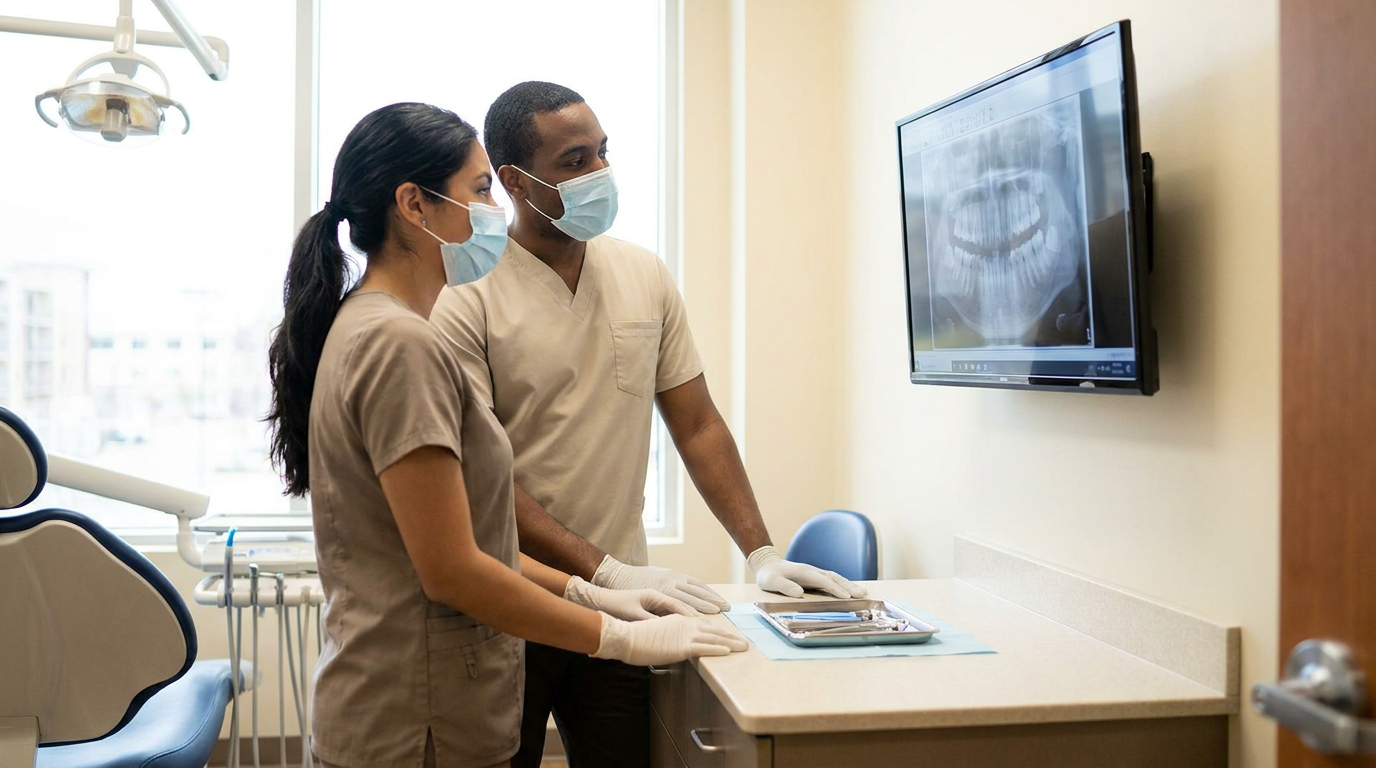
Radiograph analysis: AI detects caries, bone loss, and other conditions on X-rays in seconds, with strong accuracy and consistency
Treatment planning support: AI highlights clinical findings so dentists can build confident, data-backed treatment plans
Insurance verification and claims: AI checks benefits and prepares claim documentation, which lowers denials and speeds up reimbursements
Operational insight: Real-time dashboards help practices track performance and find ways to improve
What this means for busy teams
Less time on admin work
More accurate diagnoses and better patient conversations
Higher case acceptance rates
Stronger revenue
Choosing the right software is not only about features. It is about preparing your practice for the future. Dental AI is no longer optional; it's becoming essential.
What is dental practice software?
Dental practice software is the central system that keeps your practice running. It helps your team manage daily tasks, care for patients, and cut administrative work, all in one place.
Core tools in traditional dental software
Appointment scheduling and automated reminders
Electronic health records (EHR) to store patient histories
Imaging and charting tools for clinical documentation
Dental billing and insurance processing for payments and claims
Patient communication portals for messaging, forms, and updates
These tools are essential for running an efficient office. But today, practices face more competition, higher patient expectations, and complex insurance rules. The basics are not enough on their own.
That is where dental AI comes in. Modern software now adds AI that raises performance to a new level.
What AI-powered platforms add
Automatic radiograph analysis for faster, more accurate diagnoses
Treatment-need identification through clinical decision support
Real-time insurance eligibility checks
Fewer claim denials through better coding and documentation
Insight into clinical performance and operational trends
AI-powered software does not just help you manage a practice. It helps you improve how you care for patients, make decisions, and grow.
If you are evaluating new software, do not stop at core features. The most valuable platforms pair everyday tools with AI that makes the whole practice smarter.
Why are more dental practices adopting AI?
AI is no longer a buzzword in dentistry. It is a proven tool that is changing how practices work. Because it can analyze large amounts of clinical data in seconds, AI helps dentists make faster, more accurate decisions, with more consistency across providers.
Dental AI is trained on millions of radiographs. It can spot signs of disease that are easy to miss in a manual review. That supports earlier treatment, better outcomes, and greater patient trust.
How AI is used in dentistry today
Radiograph interpretation: AI reviews X-rays to identify caries, bone loss, calculus, and other conditions with high accuracy
Clinical decision support: AI highlights findings and helps dentists build confident treatment plans
Real-time insurance verification: AI checks eligibility and benefits instantly to cut delays
Claims and coding help: AI reduces errors and denials and improves reimbursement rates
What dental teams gain from AI
Faster, more consistent diagnoses
Fewer admin errors and delays
Better treatment planning and patient communication
Stronger finances with fewer claim rejections
Practices that adopt AI are not just keeping pace; they are getting ahead. As more offices add AI tools, those without them risk falling behind on both care and efficiency.
What features should AI-powered dental software have?
Not all dental software is equal, especially when it comes to AI. If you are comparing platforms (such as Overjet, Pearl, and VideaHealth), look past standard scheduling and billing. The best software now includes AI that improves clinical accuracy, helps the practice run more efficiently, and supports growth.
Automatic radiograph analysis: AI reviews X-rays in real time to identify caries, bone loss, calculus, and other conditions with speed and precision. This improves accuracy and boosts case acceptance, because patients can clearly see what needs treatment.
Clinical decision support: AI highlights key findings and suggests treatment options. That makes planning faster and more consistent across providers.
Real-time insurance verification: AI checks eligibility and benefits before the appointment. This reduces coverage surprises, speeds up collections, and cuts admin work.
Revenue tools: Some platforms use AI to flag undercoded or undocumented procedures and confirm that notes support the claim. This helps you capture more revenue and reduce denials.
Easy integration: AI should connect with your existing EHR or practice management software (PMS) and keep your workflow steady, with no system overhaul.
Compliance and patient communication: AI-generated documentation and visuals support compliance and help patients understand their diagnosis and treatment. That builds trust and acceptance.
Software with these capabilities sets your practice up for long-term success in a competitive, data-driven market.
What are the benefits of built-in dental AI?
Dental AI is more than a tech upgrade; it is a practice-wide advantage. Before you invest in software with built-in AI, it helps to understand the real impact on both clinical and administrative work.
AI improves the accuracy, speed, and consistency of your daily work. Your team works more effectively, and patients have a better experience.
Top benefits
Greater diagnostic accuracy and consistency: AI identifies issues like caries and bone loss with measurable precision, which reduces error and supports earlier treatment.
Faster, more confident treatment planning: Decision-support tools give dentists actionable insights, which saves time and improves care.
Less administrative work: From insurance verification to documentation, AI handles time-consuming tasks so staff can focus on patients.
Fewer denials and faster reimbursements: Better documentation and coding mean cleaner claims and less lost revenue.
Higher case acceptance: Visual AI findings help patients understand their needs, so they are more likely to accept treatment.
Stronger insight: AI dashboards show real-time performance data, so practices can track trends, close gaps, and plan for growth.
AI is not only about doing things faster; it is about doing them better. Practices that adopt AI-powered software are more efficient, more accurate, and better set up for the long term.
How do you evaluate and compare dental software vendors?
Choosing dental software is a big decision, especially when AI can affect patient care, efficiency, and finances. Vendors offer different features and support levels, so evaluate each option carefully.
Questions to ask during software demos
Does the software include FDA-cleared dental AI for tasks like caries and bone-loss detection?
Can it analyze radiographs and deliver measurable, consistent findings?
Will it integrate with our existing PMS or EHR?
What clinical and financial results have other practices seen?
What does onboarding and training look like, and how long does it take?
What to look for
Third-party validation, such as FDA clearance or peer-reviewed studies
Customer testimonials and case studies with proven results
A clear implementation and support plan for a smooth transition
Evaluating software is not only about technology; it is also about the people behind it. Choose a vendor that offers strong AI and the training, support, and transparency to help your practice succeed.
Why is Overjet a leading dental AI platform?
Overjet is one of the leaders in dental AI. It holds FDA clearance to detect caries and measure bone level on radiographs, which sets a high bar for clinical accuracy.
Overjet's platform helps dental teams deliver better care, run more efficiently, and grow. It is more than software. It is a fully integrated AI platform built for real-world practice needs.
What sets Overjet apart
AI-powered radiograph analysis: Overjet analyzes X-rays and highlights issues like decay and bone loss, with clear, measurable findings that support accurate diagnoses and consistent decisions.
Real-time insurance and reimbursement tools: Overjet verifies eligibility instantly and documents procedures accurately, which reduces denials and speeds up reimbursements.
Clinical insight dashboards: Track provider performance, case acceptance, and consistency across locations, and turn that data into improvements.
Proven scale and trust: Overjet is trusted by many of the top DSOs and private practices in the U.S., with a track record of measurable ROI.
Direct integration: The platform works with leading practice management and imaging systems, so there is no need to replace your current tech.
Overjet is not only about adopting AI. It is about doing it with confidence, accuracy, and long-term support. With Overjet, you get advanced technology and a partner focused on helping your practice deliver smarter, more profitable dentistry.
How do you roll out AI dental software successfully?
Adopting AI-powered software can feel like a big step, but the right approach makes it smooth and rewarding. The keys are clear planning, team buy-in, and ongoing support.
Tips for a successful rollout
Appoint an internal champion: Pick a team member to lead the rollout. This person is the main point of contact, coordinates training, and keeps the team aligned.
Use Overjet's onboarding support: Overjet's specialists guide your team through setup, integration, and training, so everyone can use the AI tools well from day one.
Start with radiograph analysis: Begin with high-impact use cases like automatic radiograph interpretation. They deliver value right away and help the team see the benefit quickly.
Explain the why: Show staff how AI will improve their work, cut manual tasks, and help patients. This reduces resistance and builds engagement.
Track results early: Use Overjet's analytics to monitor performance, case acceptance, and operational gains. Early wins build confidence and keep adoption going.
With a clear plan and a trusted partner like Overjet, your practice can adopt AI and start seeing the benefits: faster work, smarter decisions, and better patient outcomes.
Final checklist: choosing the right AI dental software
As you compare platforms, make sure you are investing in something that delivers real clinical and operational value.
FDA-cleared AI: Look for regulatory clearance on clinical tools like radiograph interpretation
Real-time radiograph analysis: Automatically analyzes X-rays and highlights caries, bone loss, and other conditions
Insurance verification and claims support: Automates eligibility checks, improves documentation, reduces denials
Easy integration: Works with your existing PMS and imaging software without a full overhaul
Proven results and case studies: Real success stories from practices like yours
Onboarding and training: Includes setup, support, and ongoing training
What can AI do for your dental practice?
AI is no longer a future concept; it is changing dentistry today. Practices that adopt AI-powered software see real gains in patient care and performance.
What AI lets your practice do
Improve diagnostic accuracy with consistent radiograph analysis
Speed up treatment planning and boost clinical confidence
Automate insurance verification and reduce claim denials
Save time on admin tasks and work more efficiently
Increase case acceptance with visual, data-backed presentations
Get real-time insight into clinical and business performance
Whether you run a single office or a multi-location DSO, AI helps you deliver better care, make faster decisions, and improve financial results.
Frequently asked questions (FAQ)
What is dental practice software, and why is AI important? Dental practice software manages scheduling, billing, imaging, and patient records. With AI, it does more: it automates radiograph analysis, improves diagnostic accuracy, and cuts admin work. AI makes the software smarter, faster, and more effective.
How does AI improve radiograph interpretation? AI is trained on millions of dental images and can detect signs of caries, bone loss, and other conditions with precision. That supports more accurate diagnoses, faster planning, and consistent standards across providers.
Can AI really reduce claim denials and boost revenue? Yes. AI verifies eligibility in real time, helps document procedures accurately, and flags coding errors. The result is cleaner claims, fewer denials, and faster reimbursements.
Is AI difficult to implement in a dental practice? Not with the right support. Platforms like Overjet offer onboarding and training, and most practices start with high-impact features like radiograph analysis. The transition is designed to be smooth and low-disruption.
Why choose Overjet over other dental AI platforms? Overjet is FDA-cleared to detect caries and measure bone level on radiographs. It is trusted by leading DSOs and private practices, integrates with existing systems, and delivers measurable clinical and financial gains.