







Updated: September 2026
Key takeaways
DSOs implement AI first to create consistency and standardization of care across providers and locations.
Objective AI findings reduce diagnostic variability that leaves patients skeptical about treatment recommendations.
Standardized protocols improve clinical alignment between doctors and hygienists, especially for perio care.
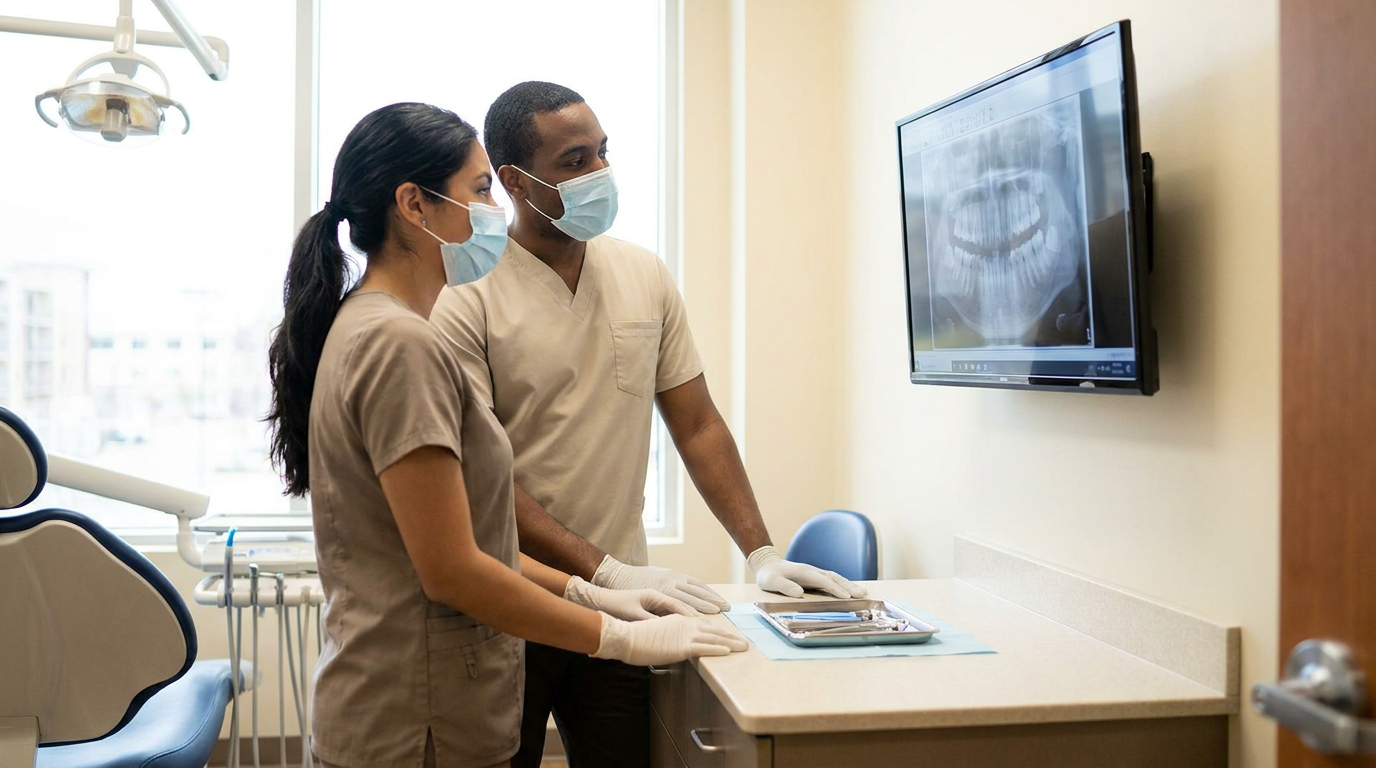
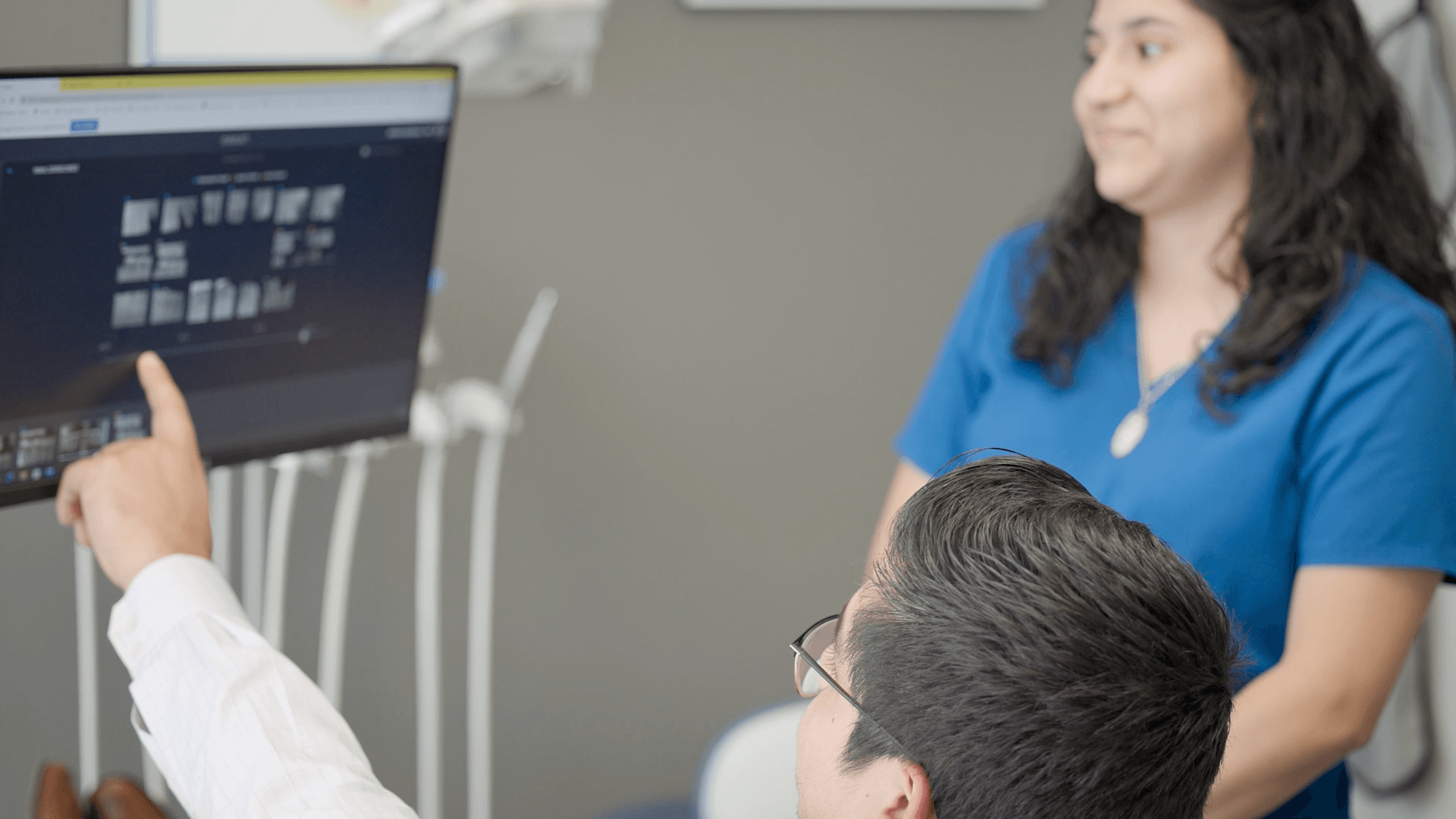
AI-assisted case presentation drives higher case acceptance when patients can see annotated evidence on their X-rays.
There’s a saying in dentistry that if you show two dentists the same , you’ll get two different diagnoses.
Variations in clinicians’ training, experience level, and philosophy all contribute to the lack of standardization in diagnosis and treatment planning. The difference in opinions can leave patients skeptical about what they really need in order to have a healthy smile.
Implementing AI for radiograph analysis and clinical insights can make a big difference. A recent poll conducted by Overjet discovered the number one reason why is to create consistency and standardization of care. Respondents could choose more than one answer. Here are the poll results:
82% – Create consistency and standardization of care
80% – Help clinicians with their diagnostic workflow
78% – Increase case acceptance and improve patient communication
68% – Achieve better patient outcomes
35% – Train, coach, and mentor clinicians
How does AI create clinical consistency?
Unlike human eyes, computer vision never gets tired. It generates objective findings whether it’s analyzing and annotating X-rays for the first patient of the day or the last.
Overjet’s FDA-cleared platform detects and outlines , identifies , quantifies , and draws the eye to areas that require a closer look. It provides dentists with real-time, data-driven insights.
The decision on how to act on the information remains with the dentist.
“The doctors’ training and philosophy guide their diagnosis, but having AI provide objective data helps standardize the treatment protocols, which leads to better clinical alignment and a better patient experience.”
Dr. Ankoo Raina, Chief Dental Officer at Jefferson Dental & Orthodontics, a group with more than 75 locations.
It also helps create clinical alignment between the doctors and hygienists, which is particularly helpful for groups seeking to standardize protocols for periodontal treatment. Hygienists can refer to Overjet’s AI-generated bone level measurements as well as the patient’s periodontal probing depths, amount of bleeding, and other clinical indicators to support their recommendation for and planing or other treatment.
AI Benefits for DSOs
Dental are facing a number of challenges that AI can help solve.
Here’s how can promote optimal patient care, increase revenue, and even help with recruiting and retaining providers.
Increase case acceptance: An internal study by Overjet discovered that case acceptance rates increase by a on average when a patient is shown X-rays with and annotations. When patients understand why they need treatment, they are more likely to agree to it.
**Identify potential treatment needs: **Overjet’s AI analyzes 18 months of radiographs from previous visits and cross-references with treatment plans in the practice management system to identify potentially undiagnosed restorative and periodontal treatment needs. It then displays the findings on a dashboard to help providers plan their day.
**Improve diagnostic confidence: **Less-experienced providers may lack confidence in their diagnostic or presentation skills. AI-annotated X-rays help them to know where to focus their attention. Plus, patients like it when the objective findings support their providers’ diagnosis and are more confident about proceeding with treatment.
**Help with recruiting and retention: **About 14% of practices were hiring dentists and more than a third were hiring dental assistants and hygienists in September 2022, according to the ADA Health Policy Institute report. to help recruit clinicians and team members. Since the tool helps make diagnosing and case presentation easier, it helps DSOs retain team members, too.
in 2022 say it’s given them a competitive advantage with both providers and patients.