
 Agent Ivy






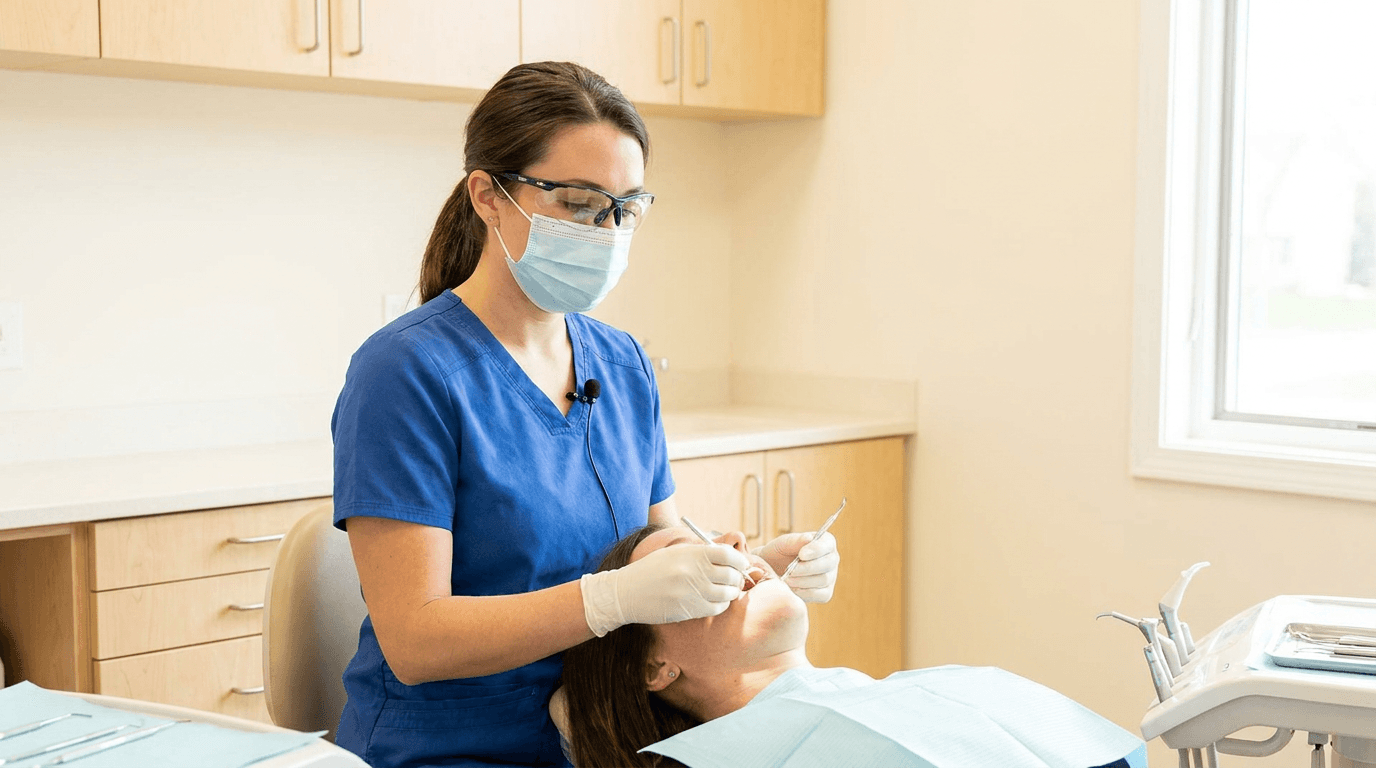
You review SRP acceptance and recall compliance across your locations, and the numbers move chair to chair. Same patient profiles, same clinical findings, different results depending on who's in the operatory. The patients aren't the reason. Each hygienist explains periodontal risk a little differently, and each one documents it a little differently. More scripts and another training session haven't closed that gap. Overjet Voice AI takes a different route by standardizing how the perio conversation gets captured and recorded at every chair.
Why perio conversations drift across a hygiene team
Walk through a day across your group and you'll hear the same diagnosis delivered a dozen ways. One hygienist frames bone loss in plain terms the patient can act on. Another rushes the explanation and moves to the next column on the chart. A third covers it well but never records what was actually said. The clinical finding is identical. The patient's understanding, and their decision about SRP, is not.
The documentation drifts the same way. When notes vary by provider, recall reminders go out inconsistently and claims for the same procedure get supported unevenly. You see it downstream as soft acceptance and avoidable denials. The cause sits upstream, in patient education conversations you weren't in the room for.
How Overjet Voice AI standardizes capture and documentation
Overjet Voice AI records the clinical encounter and turns it into structured documentation while the hygienist works. Probing depths and findings get captured by voice, so the data lands in the chart the same way at every operatory, with no one turning to type mid-exam. The perio note reflects what was actually discussed, structured consistently from one visit to the next.
That consistency does real work on the claims side. Uniform, complete documentation supports the SRP you're billing and holds up when a payer asks for it, which is why practices using Voice AI report a 25% reduction in claim denials. It also gives time back to the people doing the work. Hygienists save about 1.5 hours a day they used to spend on notes, and note completion climbs roughly 20%. The patient gets more of the hygienist's attention during the appointment, and the practice keeps a record it can stand behind.
From a consistent conversation to leadership visibility
Once every perio conversation is captured and documented the same way, the value doesn't stop at the note. That same data shows you how case presentation actually varies across your team. You can see which providers connect well with patients and where treatment presentation falls short, by operatory and by location, without sitting in on a single appointment.
That's the job of Leadership Insights, which scores encounters against criteria you define and surfaces the patterns to leadership. It's how a hygiene leader coaches from real data instead of secondhand impressions, and how newer providers get specific feedback on their own appointments. We go deeper on how that works in our breakdown of Leadership Insights.
A consistent conversation is the lever
Consistent perio conversations, documented automatically, move the metrics you're measured on. Acceptance and recall get steadier across locations, and collections follow, because the documentation behind every SRP is uniform and defensible. None of it adds to your training calendar, since the standardization lives in the tool rather than a binder no one opens. For a hygiene team spread across more than one location, that's worth a closer look.
See How Overjet Works
Frequently asked questions
How does Voice AI keep perio documentation consistent across multiple locations?
Overjet Voice AI captures probing depths and findings by voice and generates a structured perio note from the encounter. Because the same capture process runs at every operatory, the documentation reads consistently from one provider and location to the next, instead of varying with each hygienist's charting habits.
Does Voice AI replace the hygienist's clinical judgment during perio charting?
No. Voice AI records and documents the encounter and enters the data the hygienist reports. The hygienist still performs the exam, interprets the findings, and makes the clinical decisions. The tool removes the manual charting and note-writing, not the clinical work.
How does standardized perio documentation affect insurance claims for SRP?
Claims for scaling and root planing depend on documentation that supports both the diagnosis and the procedure. When notes are complete and consistent across the team, the supporting record is stronger and easier to produce on request. Practices using Voice AI report a 25% reduction in claim denials.
How does Voice AI help a hygiene leader improve case acceptance?
The conversations Voice AI captures become data leadership can review. Leadership Insights scores encounters against criteria the practice defines and surfaces where case presentation is strong and where it lags, by provider and by location. That gives a hygiene leader specific feedback to coach from instead of general impressions.