
 Agent Ivy





You saw your last patient an hour ago. The operatory is clean, the front desk has gone home, and you're still at the keyboard finishing notes. Charting is one of the biggest time drains in a clinical day, and it tends to follow you out the door. Here's how to cut it down without leaving your documentation thin.
Why charting takes so long
Dentists spend about 11-15% of their working hours on documentation. Much of that goes to rework: fixing incomplete notes, hunting for the right template, and reconstructing what happened in a visit three patients ago. The way to get that time back is to cut those steps out of your day.
Standardized notes, configured to your exam flow
Consistent note structure is one of the biggest levers on charting speed, and Voice AI builds it in. Overjet generates structured clinical notes in the same format every time, so your documentation doesn't vary by provider or by how late it is in the day.
During onboarding, Overjet configures those note formats around your most common procedures and the order you actually examine in: exams, restorative, perio, and extractions. Once the structure matches your workflow, notes fill in as you go, and anyone covering a chart can read them quickly without chasing you for clarification.
Chart during the exam, not after it
The single biggest time saver is capturing notes while the visit is happening. End-of-day charting forces you to remember details from hours earlier. That's where errors creep in, and where notes get thin enough to trigger a denial later. Documenting in the moment keeps the detail fresh and spreads the work across the day instead of dumping it all at 5 p.m.
Let your voice do the typing
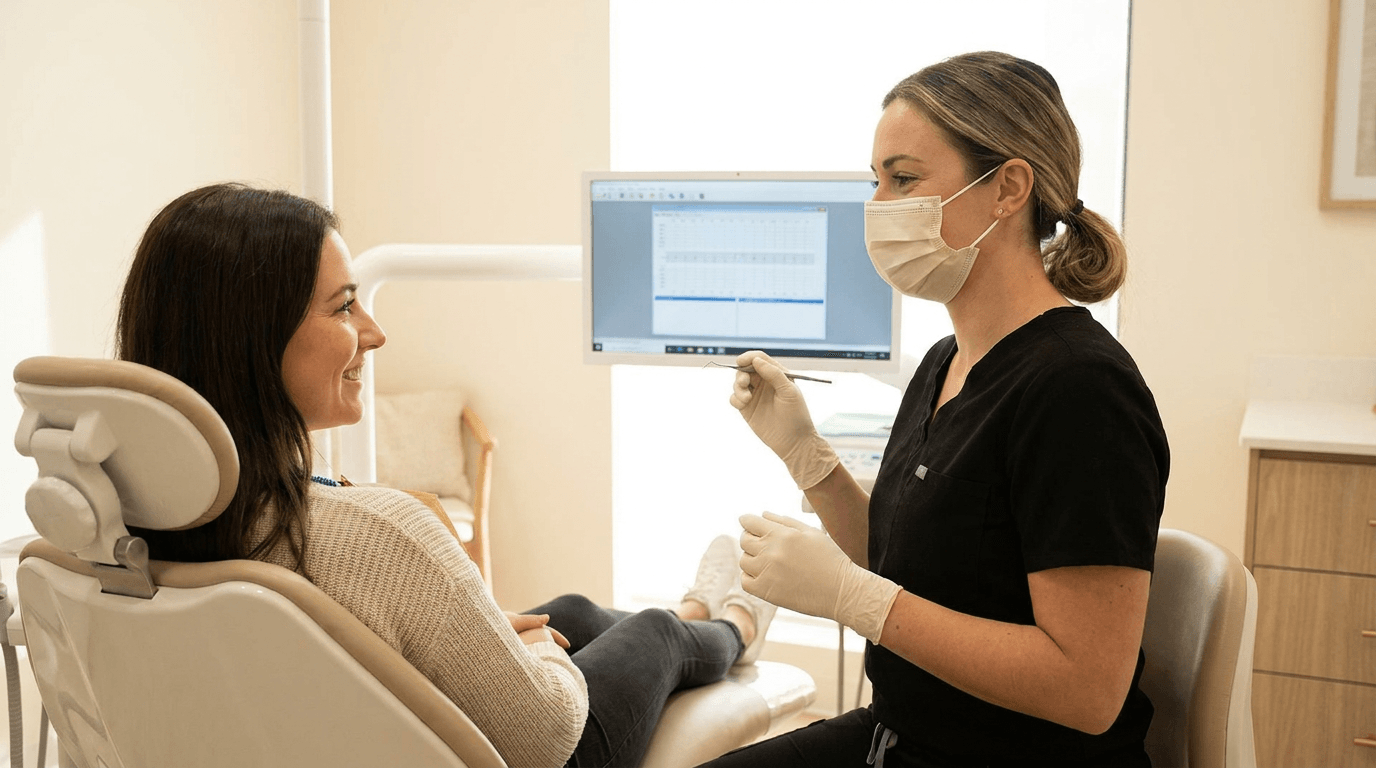
Instead of typing or clicking through fields, you can chart by speaking. Overjet Voice AI listens to the visit and turns the conversation into a structured clinical note. You talk through your findings the way you already do, and the note takes shape as you work. The Scribe module handles visit notes, Perio captures voice-entered probing depths, and Letters drafts referral and recall correspondence from the same conversation.
Practices using Voice AI report saving 5+ clinician hours per week. Note completion goes up about 20%, because notes get finished at the chair instead of piling up.
Faster notes mean faster billing
Charting also affects how fast you get paid. When documentation is complete and consistent, claims have what they need the first time. Overjet customers using Voice AI report a 25% reduction in claim denials. Fewer denials means less back-and-forth with payers, and faster payment for work you've already done.
What it looks like in a real practice
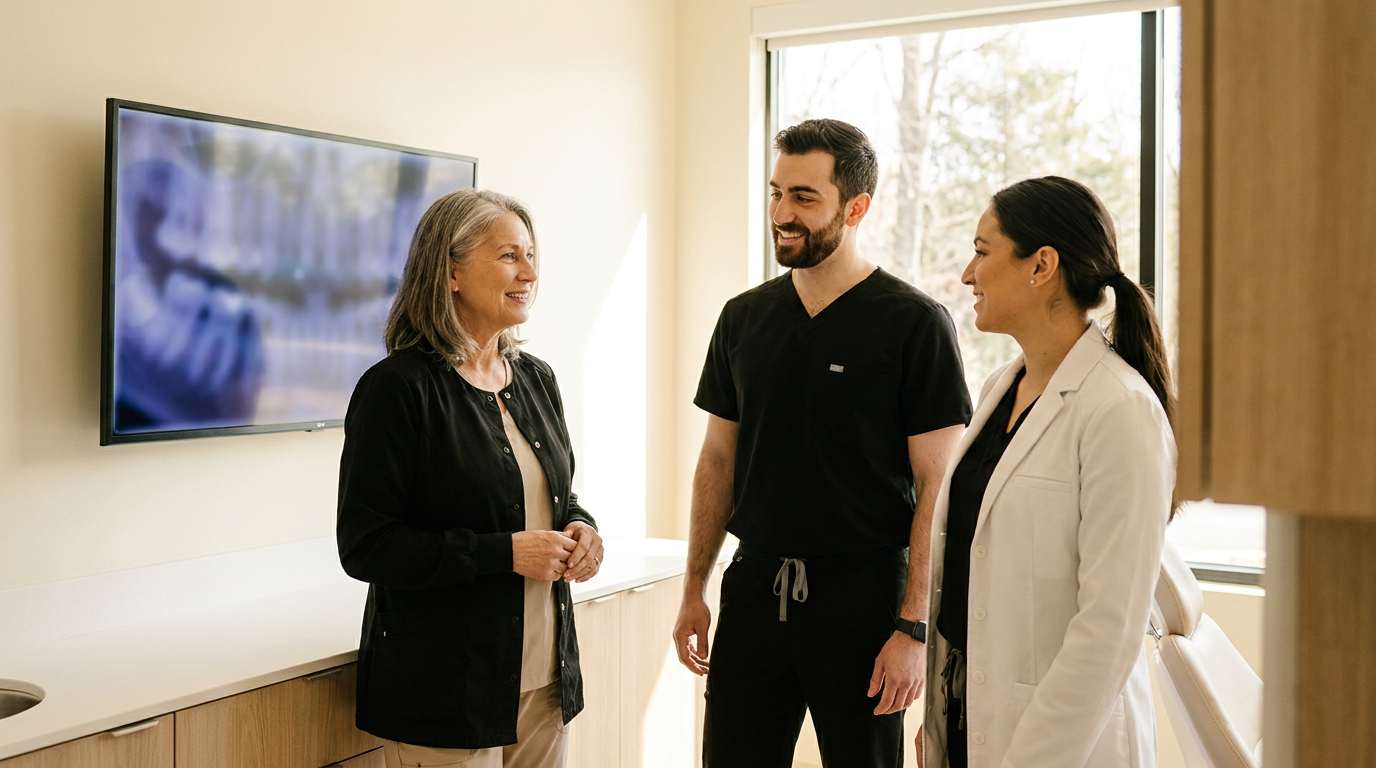
Jennie, an EFDA at Great Smiles Family Dentistry, put it plainly after the practice adopted Voice AI:
"We're saving easily probably 20 minutes a patient... I have seen more lunch breaks than ever in my entire career and I've been in dentistry for 20 years now."
Results based on Great Smiles Family Dentistry's experience. Individual results may vary.
Across Overjet's customer base, Voice AI users report saving 5+ hours a week, which lines up with the kind of daily time Jennie describes.
Where to start
Charting will always be part of the day. Standard templates, documenting during the visit, and voice capture keep it from spilling into your evenings, so the work finishes when the patient does.
Want to see how much time voice capture could save in your operatory? Book a Demo.
Frequently asked questions
How much time do dentists spend on charting?
Dentists spend roughly 11 to 15% of their working hours on clinical documentation. A large share of that is rework, like finishing thin notes and finding the right template, rather than the writing itself.
What's the fastest way to reduce charting time?
Capturing notes during the visit instead of at the end of the day is the single biggest time saver. Standard templates that follow your exam flow and voice capture cut the time down further.
How does voice AI reduce charting time?
Voice AI turns the spoken visit into a structured clinical note while you work, so you're not typing after hours. Practices using Overjet Voice AI report saving 5+ clinician hours per week and about a 20% increase in note completion.