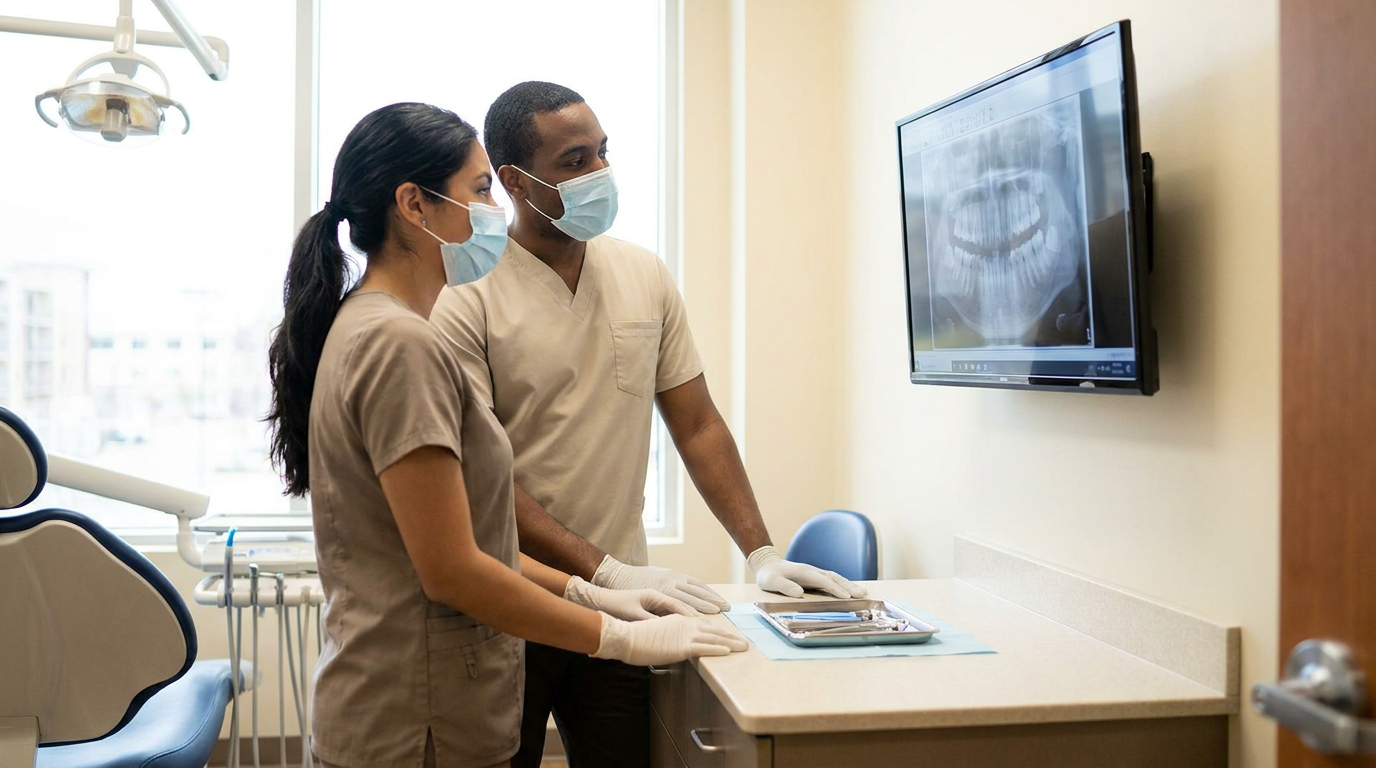









AI-backed treatment plans build patient trust by showing the patient the evidence behind each recommendation. When Overjet Vision AI overlays FDA-cleared, color-coded analysis on the X-ray, the dentist and the patient see the same objective findings, so the patient can confirm why a tooth needs treatment.
TL;DR
Patients often decline care they cannot verify, because a spoken recommendation can sound like it was made for revenue.
A transparent treatment plan pairs each recommendation with the finding it rests on, shown on the patient's own radiograph.
Overjet Vision AI detects and measures those findings and displays them in color, so the clinician and the patient read the same image. The dentist still makes the diagnosis.
Practices that show patients this evidence report higher case acceptance and stronger patient loyalty.
Why do patients distrust dental treatment plans?
Patients distrust treatment plans because they cannot read the evidence a plan is built on. Someone who hears "you need a crown" has no way to examine the tooth for themselves, so the recommendation arrives as an opinion, and a longer plan can look like a way to bill more. A 2025 review of dentist-patient communication found that "when a patient understands his or her diagnosis and the reasons for a specific treatment plan, they are more willing to follow the dentist's recommendations" (Dentistry Journal, 2025). When the reasoning stays hidden, many patients hedge by postponing or declining treatment they genuinely need.
What is a transparent treatment plan in dentistry?
A transparent treatment plan pairs every recommendation with the specific finding it rests on. The patient looks at their own radiograph with each area of concern marked on the image, then hears how that finding leads to the proposed treatment. The same approach fits a single filling and a full-mouth rehabilitation, because the patient sees the evidence for each line of the plan rather than a total at the end.
What does a transparent, AI-backed treatment plan look like?
A transparent, AI-backed treatment plan begins with the radiograph on the operatory screen. Overjet Vision AI analyzes bitewing and periapical images and lays standardized, color-coded findings over them, so periodontal bone loss is measured to the millimeter and displayed in a color the patient can point to. Because the analysis follows the same standard every time, a patient sees consistent markings whether an associate or the practice owner is in the chair. Vision AI detects and measures these findings. It does not diagnose. The clinician reviews the objective data, weighs it against the full clinical picture, and sets the plan.
How does showing the AI analysis change the trust conversation?
Showing the analysis lets the whole clinical team take part in the explanation, starting before the dentist enters the room. A hygienist can point to the measured bone loss on the screen during the cleaning, so the patient already understands the problem by the time the exam begins. Bridget, a hygienist, describes the effect:
One of the hardest parts of being a hygienist is when patients don't understand that they have periodontal disease. With Overjet, you can show them exactly where there is bone loss, and the measurements and colors on the X-rays create an a-ha moment. Now they get why they need treatment, which increases case acceptance and creates loyalty.
With the finding on the screen in front of both the dentist and the patient, the appointment is spent explaining the care rather than defending the recommendation.
Does transparency increase case acceptance?
Transparency increases case acceptance because a patient who can verify the evidence is more willing to move forward with care. Dr. Okoro at DOA Steeplechase reported the result directly:
I have seen my case acceptance skyrocket since using Overjet.
The effect builds over time. A patient who understood their own diagnosis is more likely to return for the next phase of treatment, less likely to go elsewhere to have the work re-checked, and more likely to refer family who receive the same clear walkthrough.
Patient trust and AI treatment plans FAQ
Does the AI diagnose the patient?
No. Overjet Vision AI detects and measures findings on the radiograph. The dentist reviews that objective data and makes the diagnosis and the treatment plan.
Is Overjet Vision AI FDA-cleared?
Yes. Overjet Vision AI is FDA-cleared, so the analysis shown to patients rests on validated, regulated technology.
How does showing AI analysis help case acceptance?
Patients accept care they understand. When the finding is marked in color on their own X-ray, the recommendation becomes visible evidence they can verify, which builds trust and lifts acceptance.
See it in the operatory
Overjet Vision AI puts objective, color-coded findings in front of patients on their own radiographs. Book a demo to see how that evidence builds trust and raises case acceptance across your practice.