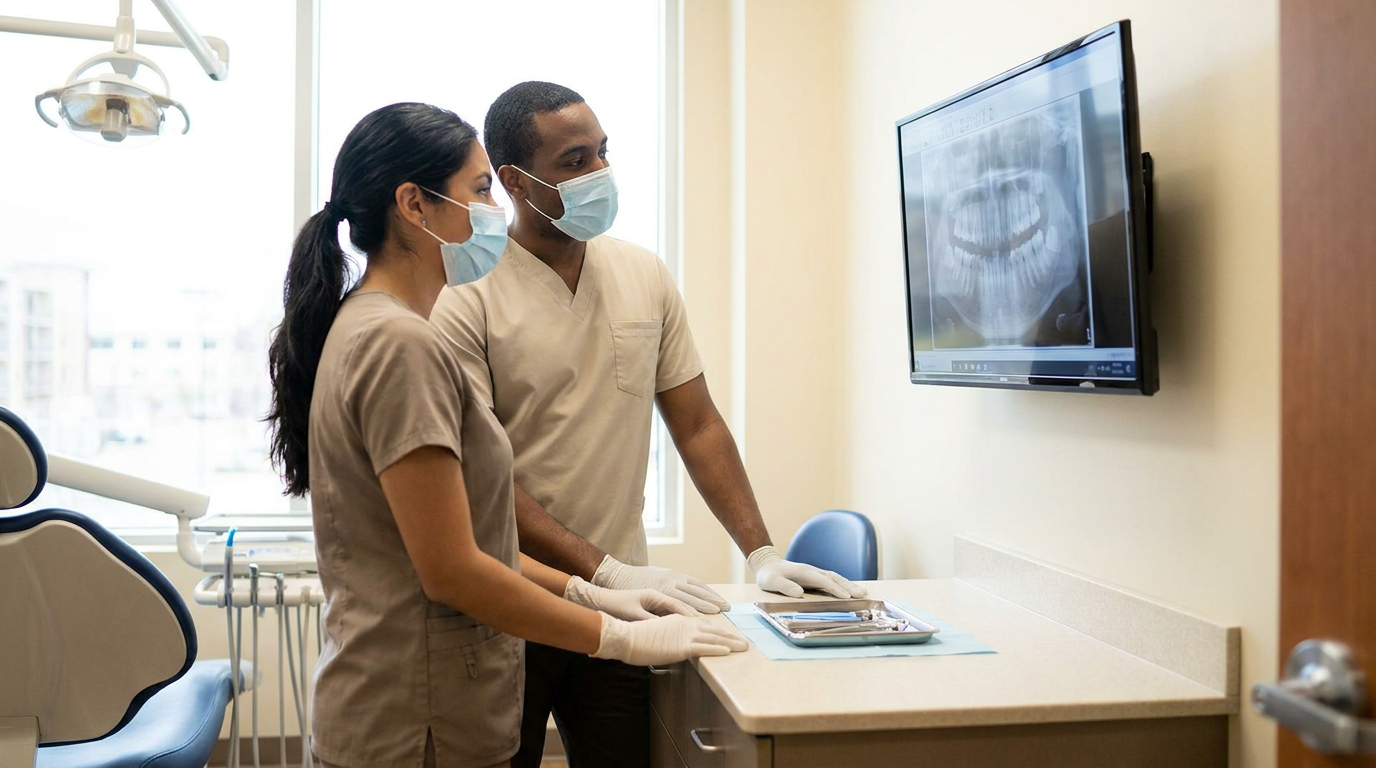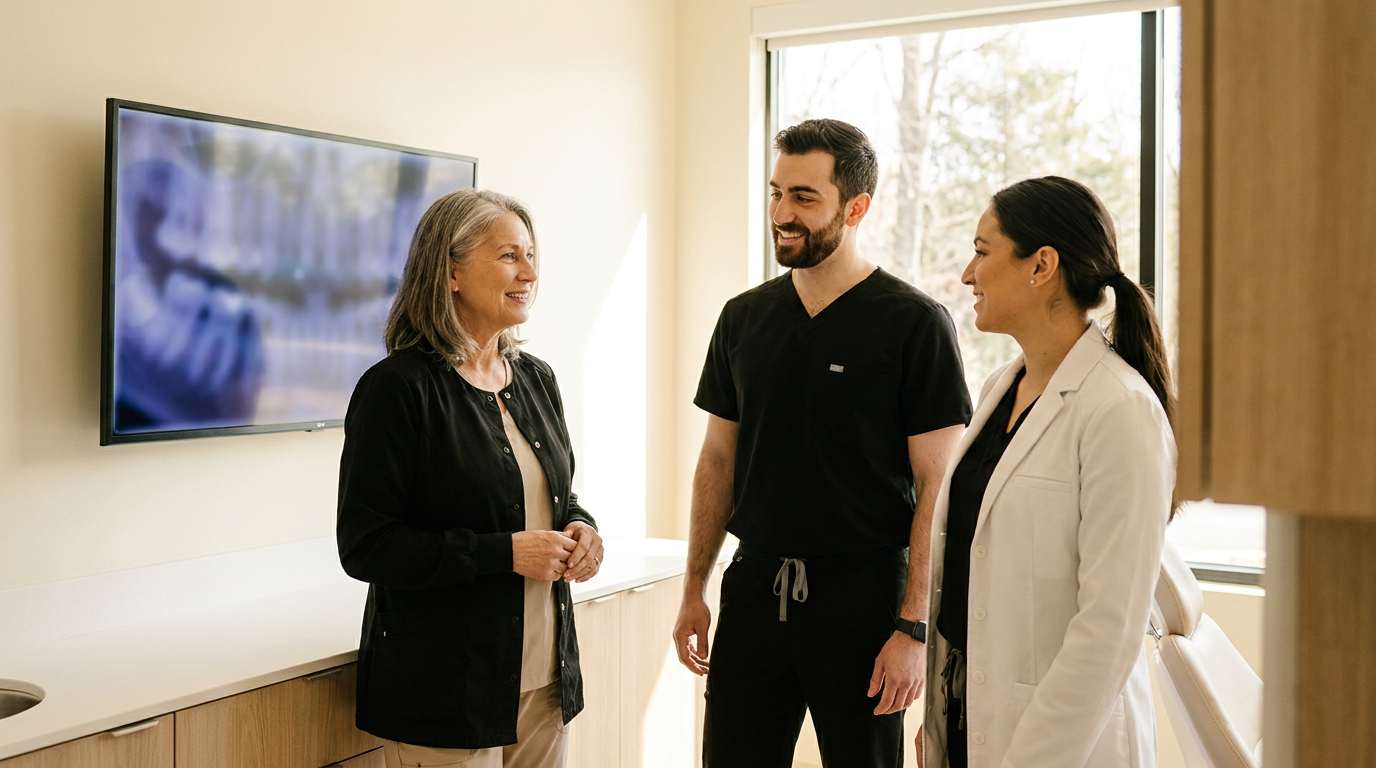






When two associate offers pay about the same, dentists pick the practice with the easier workday. That puts the tools you run at the center of hiring. An office that uses AI to cut charting and administrative time sends associates home closer to on time, with more of the day spent on patients than on paperwork, and candidates weigh that as heavily as the salary.
TL;DR
The dentist labor market is tight, and open associate chairs cost production every week they stay empty.
Associates compare practices on daily experience, and time lost to charting and admin is a top frustration.
AI-powered tools like Overjet Voice reduce documentation time, which makes your practice more attractive to hire into and easier to stay at.
Framing technology as a recruiting advantage, not just a cost, helps a practice compete for talent competitors are also chasing.
How tight is the dentist labor market right now?
In much of the country, demand for dentists outpaces local supply, so strong candidates can be selective about where they practice. The federal Health Resources and Services Administration designates more than 7,000 dental Health Professional Shortage Areas and estimates it would take roughly 10,744 additional dentists to close the gap.
The Bureau of Labor Statistics projects about 4,500 dentist openings a year through 2034. Where demand runs ahead of supply, the practice with the better offer, and the better daily experience, gets the hire.
Every week an associate seat sits open, the practice loses the production that clinician would have generated, and the existing team absorbs the overflow. That cost is why hiring has moved from an HR task to a business priority.
Why does a practice's technology stack affect who it can hire?
Compensation gets a candidate in the door. Daily experience decides whether they stay, and whether they tell their peers to apply.
Associates are clinicians first. They want to spend their time on patients, not on paperwork. When two offers pay about the same, the deciding factor is often what the workday actually feels like: how much time goes to charting after a patient leaves, how consistent the diagnostic tools are, and how much the practice has invested in making clinical work smoother.
A practice still running on manual documentation and end-of-day charting is a harder place to work than one that has cut that burden. Candidates notice. The tools a practice runs signal whether it respects a clinician's time.
How does reducing charting time make a practice more attractive?
Charting is one of the most common associate frustrations, and it is one of the clearest places technology changes the daily experience.
Overjet Voice is an ambient AI tool that documents and analyzes the patient visit automatically, so clinicians spend less time typing notes and more time with patients. When documentation happens in the background, associates finish closer to on time, carry less charting home, and feel less of the administrative drag that pushes people to look elsewhere.
That is a direct recruiting message. You are not just offering a job. You are offering a workday with less friction, backed by FDA-cleared AI that supports the clinician rather than adding steps.
AI handles the documentation and analysis. The dentist still makes every clinical call.
What should a practice look for in recruiting-friendly technology?
Not every tool improves the workday. When evaluating technology as a hiring advantage, a practice should look for a few things:
It removes work, not adds it. The tool should cut charting or admin time, not create a new task to manage.
It supports clinical judgment. AI that detects and measures gives associates objective backup, while the clinician keeps control of the diagnosis.
It is proven and cleared. FDA-cleared tools signal that a practice invests in credible clinical technology, which candidates weigh when comparing offers.
It scales. As a practice adds locations or associates, consistent tools keep the experience the same in every chair.
Technology alone will not fix a hiring gap. But in a market where candidates have choices, being the practice that clearly respects a clinician's time is a real differentiator.
Frequently Asked Questions
Does technology really influence dentist recruitment?
Yes. When compensation is comparable, associates weigh the daily work experience heavily, and tools that reduce charting and administrative time make a practice more attractive to join and easier to stay at.
How does Overjet Voice help with the daily workday?
Overjet Voice is an ambient AI tool that documents and analyzes the patient visit automatically, which reduces the time clinicians spend on notes and lets them focus on patients.
Is AI making the diagnosis for the associate?
No. AI detects and measures to support the clinician. The dentist makes the diagnosis and every clinical decision.
Book a demo
See how modern practice technology can become part of your recruiting pitch. Book a demo to see how Overjet Voice reduces charting time and helps your practice compete for clinical talent. Book a Demo