




Updated: September 2026
Key takeaways
New dentists show wide diagnostic variability early on, and oversight of it falls on senior clinicians.
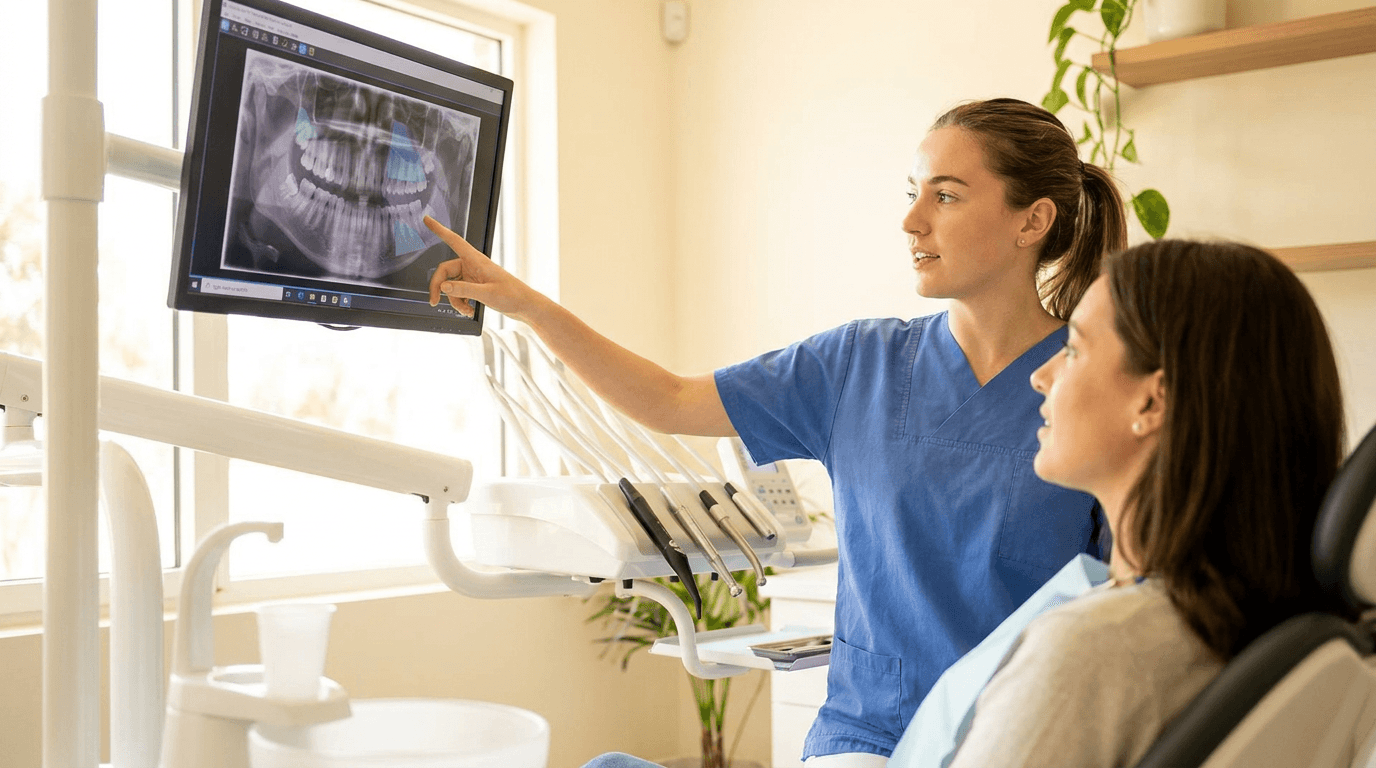
Vision AI surfaces caries, calculus, periapical, and bone-level findings on every radiograph before the new dentist writes a note.
The same FDA-cleared analysis runs at every location, raising the floor for consistency network-wide.
Review shifts from "did you catch this?" to clinical reasoning, so new dentists reach independence faster.
Most CCOs at growing DSOs can identify their newest hire's cases without looking at the provider name. Treatment plans look different. Findings get missed. The diagnostic variability between a new dentist in their first quarter and a seasoned clinician is wide, and that transition takes longer than most onboarding timelines allow for.
Why does new dentist onboarding take longer than most organizations plan for?
Dental school gives students time. Several hours for a single patient is common. Private practice doesn't work that way. New dentists enter a schedule where they're seeing more patients in a day than they worked with in a week at school, and they're expected to move across operatories while doing it. According to Community Dental Partners, most new dentists find that time management becomes a significant problem in their first year.
The clinical pressure shows up in diagnostic decisions. One dentist flags interproximal decay that another misses. One documents bone loss with precision; another's notes are vague enough to be questioned on audit. These aren't careless mistakes. They're the predictable result of different training backgrounds combined with the pressure of moving faster than dental school ever required.
The oversight load during this window falls on your most experienced clinicians. They're reviewing plans, flagging missed findings, and stepping in where consistency breaks down. For a growing DSO adding new providers every year, that overhead scales with every hire.
What does Vision AI do on every case?
Overjet's Vision AI analyzes radiographs and surfaces findings in real time. It's FDA-cleared to detect caries, calculus, and periapical radiolucencies, and to quantify bone levels with millimeter precision. With 12 FDA clearances, more than any other dental AI company, it covers the conditions that come up most in daily clinical review.
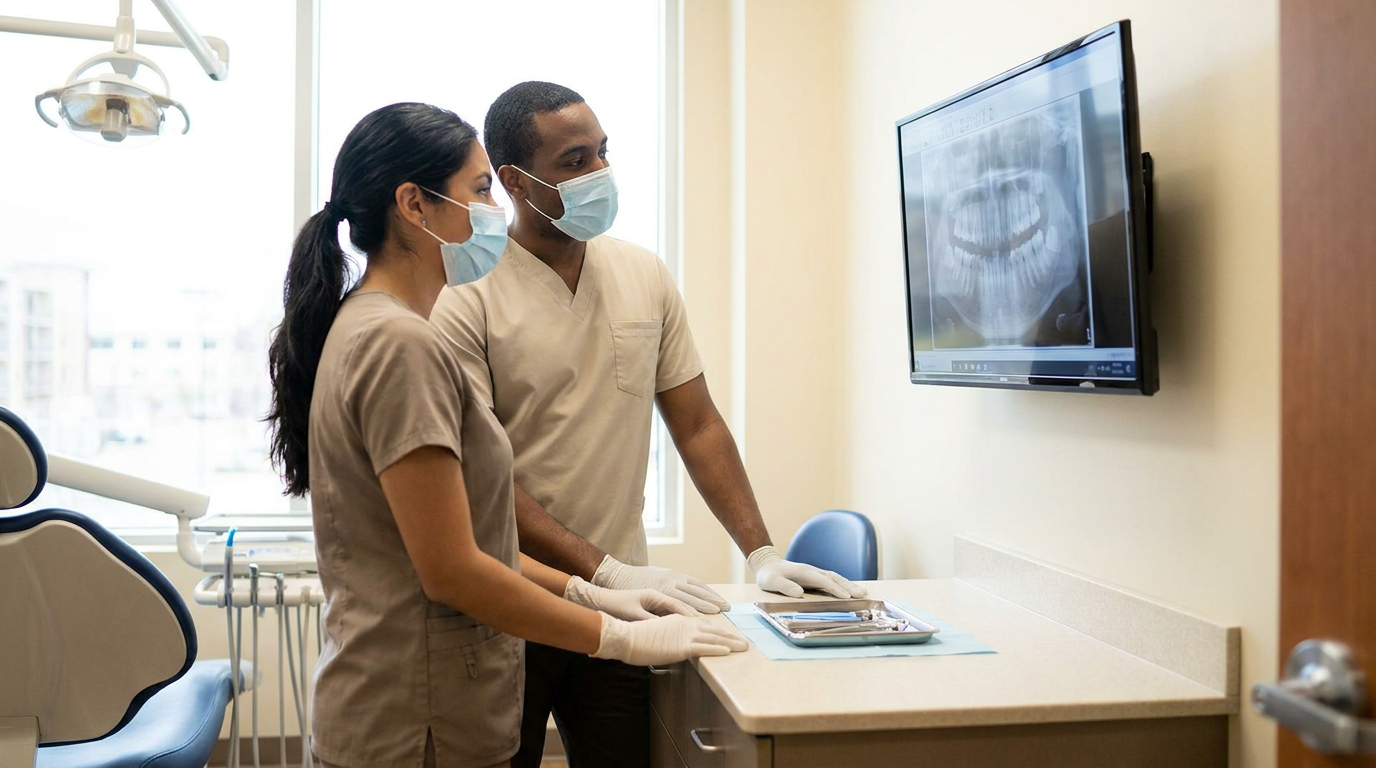
When a new dentist opens a case, they see the AI analysis alongside the radiograph. Decay is outlined. Bone levels are measured. The findings are there before they've written a single note. Dr. Joshua Prentice, a practicing dentist using Overjet, said it directly: "It shows you where to look. It gives you more information to help you diagnose."
For a new dentist moving through a full schedule, that matters. They're not pausing to second-guess a finding or pull a senior clinician in for a look. They can see what the AI has detected, confirm their clinical assessment, and move forward. Periodic chart reviews can't replicate that kind of case-by-case reinforcement.
What do consistent AI findings mean for diagnostic standardization?
One of the harder problems CCOs face at scale is that diagnostic quality varies not just by provider experience, but by location. A new dentist hired in one market gets calibrated against the senior clinicians in that office. A new dentist in another market gets a different baseline entirely.
Vision AI applies the same FDA-cleared analysis to every radiograph across every location. New dentists in different offices are working against the same reference point, which means the floor for diagnostic consistency rises network-wide, not just in offices with the strongest clinical culture.
At Matthew Cripes Dental, production per patient increased 20% after adopting Vision AI, driven by improved case acceptance. When findings are documented clearly and patients can see what the dentist sees, treatment decisions move forward.
How does this shift the supervisory picture?
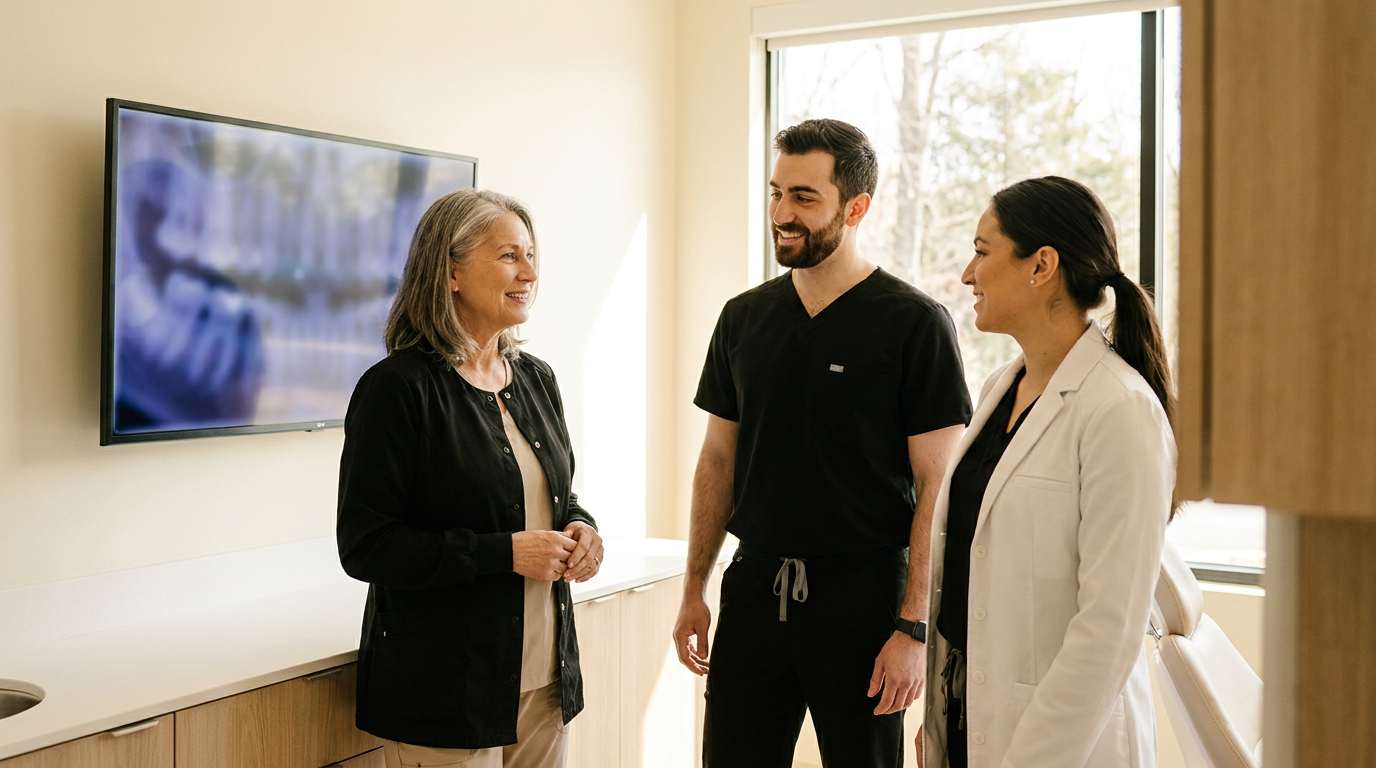
When AI findings are present on every case, the review conversation between a new dentist and a senior clinician changes. The question isn't "did you catch this?" as often. The conversation becomes more focused on reasoning: why treat it this way, or why hold on this one. It's a more productive clinical exchange, and a faster path to independent performance.
Senior clinicians get real time back. New dentists build clinical confidence faster because the feedback they're getting is specific, not just corrective. For a CCO managing clinical quality across a growing network, that shift matters. Oversight doesn't disappear, but the baseline is higher and the spread between providers is narrower.
Book a demo to see how Vision AI works in a clinical workflow.
Frequently Asked Questions
Is Vision AI FDA-cleared for the conditions most relevant to new dentist onboarding?
Yes. What matters for onboarding is that clearance covers the exact findings new dentists most often miss or document inconsistently: interproximal caries, calculus, periapical radiolucencies, and bone level. A first-year associate reads against a regulated standard instead of whichever senior clinician happens to be in the office that day.
How does Vision AI fit into an existing onboarding program?
Vision AI works within your existing clinical workflow. It analyzes radiographs and surfaces findings in the same interface your providers already use, so there's no separate training module to run or parallel system to manage. New dentists see AI findings as part of their normal case review from day one.
Does using Vision AI reduce the need for clinical oversight during onboarding?
It redirects oversight rather than removing it. The time senior clinicians spent re-checking for missed findings moves to the harder question of why a case is treated one way versus another. Total oversight hours fall, and the share spent actually mentoring rises.