Redefining the Patient Experience: AI in Action
At a glance
Dentists can use AI to turn tell into show and tell. Instead of asking a patient to squint at a gray x-ray, a color-coded, annotated image lets the patient count their own cavities and see disease for themselves. That shifts the dentist from the bad guy delivering bad news to a guide interpreting objective evidence — which builds trust and raises case acceptance. The clinician still makes the diagnosis.
Core topic: How a private-practice owner uses AI-annotated radiographs to redefine the patient experience. The talk returns to three threads: patient understanding as the real driver of case acceptance (show and tell, not tell), standardization and calibration so every clinician in a practice tells one consistent story, and AI as a safety net against the findings a busy clinician misses under time pressure. Dr. Posner repeatedly frames AI as a tool that assists — never a decision-maker — with the dentist responsible for diagnosis and for teaching the software.Key Takeaways
- Show and tell beats tell for case acceptance. Dr. Posner cites half of recommended treatment declined by existing patients, dropping to roughly 30% for new patients. Color-coded annotations let patients count their own lesions and see the disease.
- AI calibrates a whole team to one standard. Annotated findings give hygienists, assistants, and associates a shared philosophy; a patient hears the same story from everyone. 75 dentists showed wide variability reading one radiograph.
- AI is a safety net against time-pressure misses. 40% of caries and 67% of periodontal disease go undiagnosed under time pressure (Journal of Dentistry, 2019).
In this webinar
Is the case-acceptance barrier clinical communication, patient trust, or cost?
Dr. Posner said it's all three. The clinician's job is to identify which barrier matters most for each patient and speak to it through education — offering evidence to earn trust or acknowledging financial constraints while explaining that delaying treatment usually costs more later.
Is this like the shift from film to digital radiography?
She likened it to watching her early boss hold tiny films up to the light, then gaining the ability to sharpen, contrast, and reverse digital images. AI carries that same diagnostic momentum on steroids.
What does a lack of standardization between providers do to patient trust?
It erodes it. Hearing three different stories makes patients trust none of them. A color-coded annotated image lets her show findings objectively and let the patient absorb them, rather than simply asserting a diagnosis.
Does AI help with periodontal reimbursement and reducing over- or under-treatment?
A single annotated screenshot showing bone loss, calculus, and pockets over 4mm is powerful objective evidence for a denied claim — often stronger than a written narrative. Many large payers now run AI on the same images, so practices without it are at a disadvantage.
AI sometimes flags false findings — doesn't it need improvement?
AI is a tool clinicians are responsible for teaching. When it flags a false finding, you reject it on screen which trains the software, and can add notes for Overjet. Clinical diagnosis remains the dentist's responsibility. On overlap: garbage in, garbage out — AI won't fix a poor radiograph. Images captured in DEXIS auto-populate into Overjet.
| Figure | What it represents |
|---|---|
| 50% | Recommended treatment declined by existing patients |
| ~30% | Treatment acceptance among new patients |
| 68% | Higher sensitivity for periapical radiolucencies attributed to AI vs humans |
| ~20000 | Two-dimensional radiographs a general dentist reviews per year |
| 40% / 67% | Caries / periodontal disease undiagnosed under time pressure (Journal of Dentistry 2019) |
| 47.2% / 71.1% | Adults 30+ / adults over 70 with some periodontal disease |
| 75 | Dentists in the calibration example showing wide variability |
| >4mm / 6mm | Pocket-depth and bone-loss thresholds highlighted in her cases |
| #117 | Vision-practice ranking in New Jersey on the 2022 Inc. 5000 |
| 4 to 12 | Team growth in her practice |
Speakers
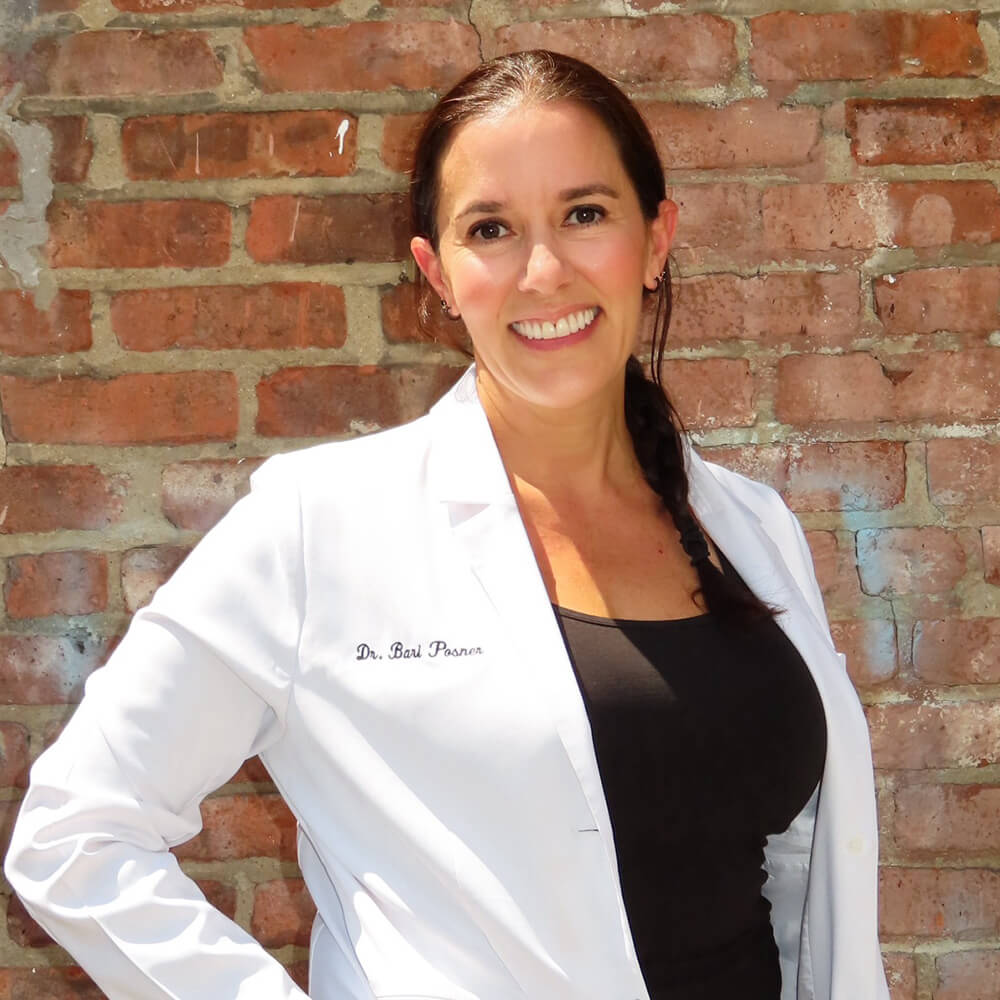
Dr. Bari Posner
Dentist
Dr. Bari Posner is the owner and a general dentist at a comprehensive practice in Hoboken, New Jersey, serving young professionals and families. She focuses on patient experience, using AI-annotated imaging to help patients understand and accept care.
Dental Associates of Hoboken
Dr. Gordon Barfield
Host
Gordon Barfield is a dentist and Senior Clinical Manager at Overjet, and one of the company's full-time clinicians. He focuses on how dental AI supports diagnosis, case acceptance, and standardized care.
View ProfileFrequently Asked Questions
How does dental AI improve case acceptance?
By making disease visible to the patient. Color-coded annotations let patients see and count their own findings instead of straining to interpret a gray x-ray, so they understand why treatment is needed and are more likely to accept it.
Does dental AI diagnose patients or replace the dentist?
No. AI is a tool never a decision-maker: it cannot perform an exam, diagnose, or treatment plan. It detects and highlights findings and the clinician makes the diagnosis and can reject anything they disagree with.
Why do dentists miss findings and how does AI help?
Time pressure. 40% of caries and 67% of periodontal disease go undiagnosed under pressure. AI flags areas to look at more closely acting as a safety net.
How does AI help standardize care across a dental team?
It gives everyone a shared objective reference. The annotated image calibrates the team to one philosophy so patients hear a consistent story which also helps mentor newer clinicians.
Can AI help get periodontal treatment approved by insurers?
A single annotated image showing bone loss, calculus, and pockets over 4mm is strong objective evidence for a denied claim — often more persuasive than a written narrative especially since many large payers now run AI on the same images.
Full transcript
Gordon Barfield: Good evening, everyone! Gordon Barfield here, from Overjet. And thank you for joining us after what was undoubtedly a long clinical day for most of you. I work in dental AI and industry, so didn't see any patients today, but we're really excited to have you join us today, and I think we have a real treat for you. We have Dr. Barry Posner from Hoboken, New Jersey, with us tonight. And, the theme around tonight's talk is going to be AI in action. transforming the dental ecosystem. Undoubtedly, most of you know that dental artificial intelligence is making a big, big stake in clinical practice now, and it will continue to get even bigger, so we're really excited to have an expert on dental AI with us tonight, Dr. Barry Posner. Barry has a practice in, as I mentioned, Hoboken, New Jersey, catering to young professionals in family-type care, a comprehensive dental practice. And so, Barry, thank you so much for joining us again and giving your time to the audience to discuss this really important topic.
Bari Posner: I'm really excited to be here, thanks so much for having me, Chibi.
Gordon Barfield: You bet. Looking forward to learning with you tonight.
Bari Posner: So I guess I'll take over from here?
Gordon Barfield: Yeah, sure.
Bari Posner: Okay, awesome. So, thank you, everyone, too, who, everyone who has signed on. I know Tuesdays are my least favorite day of the week, and I'm sure it was… ruling as the end of the year approaches, so I really do appreciate, everybody who's here. Thank you so much. We're going to talk, as Gibi said, as Gwen said, we're going to talk about how AI has transformed my practice in particular, how I hope I can, give you some insight into how it may transform yours, and we have a very short amount of time today, but my hope is that I'm able to… to give you some ideas about where AI can enhance processes, and that includes diagnostics and standardization of care from all of your clinicians, and improving patient communication and satisfaction. And learn how AI can help mentor our early career clinicians, again, from assistants to hygienists to associates and new doctors, and how we can use the… we can maximally use AI, understand what those limitations are. So, first, a little bit about me. Before I was a dentist, I was a mom, I was… well, I was a wife, and I was a mom. These are my… these are my family members. We went to Japan in April and had the best time at an owl cafe where we got to pose with these owls. I know it looks fake, and that looks like AI, but that's actually real life. And I do love my children, and I do love my husband, but my favorite human… or my favorite… my favorite person in my family is my dog. This is Maverick. He is a miniature Cavapoo. He is a working dog, and he comes into our office once or twice a week. He's a therapy dog, so he is one of the ways we enhance our patients' experience in our office. And as much as I'd love to keep showing you pictures of my family and my dog, that is not why you're here. So, a little background about my clinical professional life. I graduated from Rutgers School of Dental Medicine so long ago, it wasn't called Rutgers School of Dental Medicine, it was, you know, MDNJ. I started working in my practice, this practice on the screen, back in 2010. I partnered in my practice in 2014, and I Bought it in 2019. I grew my practice from a team of 4 of us to a team of 12, and during quarantine, I maxed out our clinical capacity space by building out our last operator. We grew so fast, in fact, we were actually recognized as one of the top 5,000 growing private companies in 2022 by Inc. 5000. And that was 117 out of the entire state of New Jersey, all of the financial companies, and this was such a humbling accomplishment for us, and I wasn't able to do it on my own. I was able to do it with my team, and I was able to do it by embracing new technology and leveraging our practice as a category of one experience. I love clinical dentistry, I love what we do, but clinical dentistry is my job, my passion is patient experience, and more specifically, it's exceeding patient expectations. I'm excited, again, that you're here and you're spending this time with me so I can share with you how technology, and specifically Overjet AI, has helped me do that. Because what I've learned in all of my years of dentistry is that we can do everything right as dentists. We can offer the right diagnosis and the right treatment plan. But none of it matters if the patient doesn't understand and accept the care that they need. And this statistic is mind-blowing to me. 50% of treatments recommended by dentists are declined by patients. And I think low case acceptance is probably a problem for all of us. And it takes more than just our medical knowledge to be excellent. As a dentist, it… it… takes our ability to empathize, sympathize, and educate our patients. That burden is on us. And statistically, this 50% is the treatments that are accepted by existing patients. That statistic actually goes down to 30% of accepted treatment for new patients.
Gordon Barfield: Barry, can I just ask you, as we're transitioning, do you think that that barrier is more clinical communication, is it patient trust, or is it economic fear? In other words, it's too expensive. Any thoughts on that?
Bari Posner: I think it's all of those things. I think it's all of those things, and it's our job to identify what the barrier is for each one of our patients, and it may be trust is the primary barrier, or financial restraints are the primary barrier. And as long as we can identify what that barrier is, and speak specifically to that through the lens of education, we're able to explain to our patient why they should be able to trust us, because we can offer so much evidence for what we're saying, or we understand that financial constraints are a real thing, and we are sympathetic and empathetic to that. However, waiting for treatment will ultimately be a more expensive route.
Gordon Barfield: And that's part of our job, isn't it?
Bari Posner: That's part of our job, that's the burden that falls on us, for sure. Yeah. And so, GB, to your point. before we had Overjet, before we had AI in our office, I think that our patient visits, our new patient visits, or comprehensive care visits, probably looked very similar to what most everyone out there does. We would collect a full series of x-rays. In our office, it is routine to do a 3D dental health scan. We use Nitero in my office. And I would sit in front of the screens with the data that was collected, and I would explain to my patient. when we look at these black and white images, I am looking for inconsistencies in gray shades, and I would do my best to explain to them. If you look over in that circle and you squint your eyes, you can kind of sort of see, right through the brightest part of the gray, there's a little bit of a dark spot, and I would walk through each individual contact, and show my patients, one by one, where I saw those indiscrepancies, where I saw radiolucencies. Of course, you don't say radiolucencies to patients. I would say dark spots, or dark carrots, or whatever popped into my head. And I would try and go around and explain to them, and of course, I didn't even have circles on the screen, but I would walk through each one, and then I would turn over to where my iTero was, and I would point out to them on the iTero, and using my near-infrared imaging, that the near-infrared imaging supports the radiolucencies that I see on the radiograph. And even saying this right now to a group of professionals, it is a cumbersome conversation. It's something that's difficult for anyone to conceptualize, but I would throw all this information to my new patients, and then I would say, and all of that treatment that you see in red on the screen, that's stuff we should be doing for you. And the stuff in black, that's stuff we should be probably watching for you, but maybe we can do something else. And the stuff in green That's the stuff that's been done before. And inevitably. Every one of them would look at me with this blank, deer-in-headlights stare and go, well, how many cavities do I have? And then they'd start the process again. since we started using Overjet in our office, I can still have that same conversation. I can still point out the radiolucencies that I see. But Overjet. makes it easier with these annotations, it almost looks like a coloring book, for me to tell my patients. Any place you see warm colors is someplace we should be paying attention to. Reds, yellows, oranges, those are areas that need to be treated. And for them, then, when they see a screen like this, they can count the lesions, they can count the areas that need to be treated, and I'm not the bad guy trying to trick them into believing that a radiolucency is there when they don't necessarily see it. So let's backstep a little bit. artificial intelligence is something that was brought to my attention back in the 1990s with, the Terminator and Skynet, so it was always something that I feared. I actually went to ChatGPT, at the very beginning of AI being introduced into me, and I asked ChatGPT, what is it? What is it that you are? What am I learning? What is coming into our world? And what I learned from ChatGPT is that there are different types of AI. There are different types of AI within the world and within each industry, and certainly within dentistry. So, for example, ChatGPT is a single-trained engine, and it helps things like this, like the explanation that's on the screen. It references our human understanding and improves upon it. This is the most basic type of AI, if you can consider AI to be basic at all. And it's not something that's the future, it's the present. And what I've learned in these couple of years working with… with all of the different AIs, but Overjud specifically, is either we learn how to use it to our advantage, or we're going to lose out to, for example, the office up the block who's using it, and we'll… Show our patients what's available for them. So, in our office, this is what I've seen AI helping us accomplish to overcome those low treatment acceptance rates. It helps us with our existing workflows, and that can be everything from our morning huddle to our patient handoff to our treatment plan presentation. Obviously, Overjet helps with radiographic information. For me, it helps me hone into areas that I may not have been paying attention to. It helps with… With explanations to patients, and it helps with co-diagnosis between clinicians. And it does support us, any clinician, in terms of disease detection, and it helps us take that disease detection and decide what kind of clinical support, diagnosis, treatment plan we're going to offer our patients. It's almost like having… a second or third set of eyes in the operatory, if you will. It's another co-diagnosis, tool for us. And having that second or third set of eyes for our hygienist, or for our dentists, or even for our assistants, that helps us build confidence in what we're seeing and what we're presenting. And that confidence is shown to our patients, and therefore our patients feel more confident In what we're explaining and what we're recommending. And at the very end of that, that increases our treatment acceptance. I started working in dentistry way, way, way back in 1993 in the front office of a dental practice, and in 1995, I moved into a clinical role as an assistant. Which is a long time ago. And back then, x-rays were the status quo. It's what we always had to help us with our diagnostic, our diagnostic parts of treatment. And since then. There have been so many different technologies that have improved that status quo, and that's digital luxuries, that's a CBCT, intraoral scanning, 3D printing, milling, robotics, smile simulations, all of that has improved what we've been able to offer our patients. And now, we don't only have those types of innovations. But we have AI, and I truly believe that AI is the new standard. And one of the reasons I say that, not only because I use it in our practice, but I received this email back in 2028. 2020, I'm sorry, August of 20, August 28th of 2025, so just a few months ago. And the headline alone really captured me. AI won't replace dentists, but it will replace dental practices that ignore it. That was a big, like, mind-blowing moment for me. It's not something… it's not Skynet, it's not something that's out of the future anymore. And I do believe a lot of… I believe all of what this says, it's… not replacing us. I don't think that AI is ever going to replace a clinician. It's meant to assist us. Our expertise, our judgment, our hands-on skills, that can't be replaced by programming or, model learning or anything like that. But what it will do is enhance our diagnostic accuracy. It's going to help us with consistency for diagnostics through our practice. It will always be a tool, for us, but it should never be a decision maker. Now, inside that email, inside that article. Just to emphasize that point. There was a multinational study of over 6,600 hands that showed AI identifying PARLs with a 68% higher sensitivity than humans. which was insane to me. 68% is a gigantic leap from what we do. But also, I know for myself, when I look at a pan. it's hard for me to read a lot of what I'm seeing, and so when I have something like Overjet flagging areas I should be paying extra special attention to, I'm able to be more accurate for my patients.
Gordon Barfield: Barry, is this, similar to the revolution we went through with radiography? You know, we've only had dental x-rays for about 75 years in our history. Do we see any parallels here between the advent of actually being able to take x-rays on dental patients and then artificial intelligence analyzing those x-rays. Is that a similar path?
Bari Posner: Well, GB, I wasn't around in dentistry 75 years ago.
Gordon Barfield: I was.
Bari Posner: No, you weren't. So I don't think I can answer that specifically, but what I can liken this to is when, analog film became… digital radiology. And I know that, you know, I used to watch my boss at the time take one of those tiny little I don't know, what was it? 1x2 rectangles, and hold it up to the light, and squint, and turn, and kind of look at the view box and see if you can see anything better. And when that… when that became… A computer image where we can sharpen and contrast and reverse, the shading. that became a lot more diagnostic, at least for me, going from dental school to clinician, and watching my boss go from film to digital. So I think this has that same… Momentum for us, but on steroids.
Gordon Barfield: On steroids. On steroids.
Bari Posner: So, but that's… thank you. You give me the best segues, GB. So how do we train these models so that they can be more diagnostic for us, and how can we train them to be tools? It's a hard thing for… at least it was a hard thing for me to conceptualize. AI learns through a process called deep learning, which is really, really similar to how we learn. I have two… they're teenagers now, but I had two small children at some point, and I remember trying to teach them how to draw a circle. this is a circle. And the way I taught them was by doing it over and over again, and they gave them crayons, and they gave them paint, and they gave them different media to use to learn that this is a circle. And teaching a computer, teaching AI, is very similar. It takes time, it takes repetition, and it's all about building associations, and… and… Frequency over time. So what… what happens in an AI… system in AI learning is that there's enough data that's fed to them that the computers start recognizing patterns on their own. It's supervised learning, again, like putting my children in a smock and giving them watercolors and telling them to draw a circle over and over again. But in this case, it's licensed dentists who annotate x-rays and then feed that data into the computer, and the models learn to look for patterns in that data. So, for example. the computers will learn to recognize a change in radio opacity of different degrees that's required for a dentist to annotate that x-ray as having a cavity. And then it takes that and applies that learning whenever it looks at new images. And that's not something that just stops. after the programming is done. The programming is never really done. This AI continues to learn every time a new radiograph is viewed and accepted or, deleted as being an inaccurate finding. So, for general dentists, we review about 20,000 two-dimensional radiographs a year. That's a lot. And I know for myself, I'm still learning. Every time I look at a radiograph, and every time I look at my… I use DEXIS, every time I look at my software to… to change contrast, or whatever it is, to try and improve what I see. AI? Analyzes millions of radiographs, and it's constantly learning, and as it trains more and more, it gets better and better and more accurate. So, the way that this works for AI is each x-ray goes through a dozen or more machine learning models, and each one of those models focuses on something different. So, one would be looking at the CEJ, one would be looking at the enamel, one looks at restorations, one looks at bone, etc. Then all of those models are aggregated into one x-ray, so that that x-ray can be made more relevant, and clinical assessments and recommendations can be made. Which means AI can, in the matter of Seconds to minutes. Take A never-before-seen radiograph. and predict similar attributes that a dentist would label. So, for example, on this screen, what you're seeing, the red areas are radiolucencies that we would call consistent with caries. There are, the line measurements are showing where the bone to the CEJ is. The rectangles are… I'm looking in the back now because my 16-year-old has corrected me more than once that they're not all rectangles, some of them are squares, so they should be called quadrilaterals. The quadrilaterals are accenting where calculus accumulation is. It's also identifying where the enamel, the dentin, and the pulp lie for anatomic landmarks for us to educate our patients. So, again. AI is a tool, and I don't think this is something that we should be fighting against. It's something we should be utilizing to help us. It's not any different than what air traffic controllers use to help them train in stressful situations, or what poker players use to teach them how to, you know, maximize statistics and elevate their game, based on… on… What they see and what probabilities are. But we're not air traffic controllers. we're not poker players or chess players, at least not professionally, as far as I know. So we're gonna focus on what AI can do for us in our… in our profession. It is a tool. It's going to help us. It's going to help us detect pathology or pathosis on radiographs. It's going to help us be more confident, especially when we're running in and out of operatories. It's going to help us be more accurate. It's going to help us improve case acceptance. It's going to help us look for clinical trends inside one specific patient. It's never going to replace us. It's never going to be able to do an exam. It's never going to be able to diagnose or treatment plan, and it's never going to replace the need for good x-rays. So just a quick sidebar on that. I found that using, Overjet. Specifically, but radio, artificial intelligence, radiographic software, has really improved the quality of what my assistants bring to me, because they have a better idea now, looking at what AI-assisted software shows them, whether or not I'm going to tell them I need a different radiograph for a better image. But most of all, most of all, what AI can do is help us improve our patient experience. And again, that's where my passion is. Just like AI can't correct those bad radiographs, it's not going to Correct a poor patient experience, but it can improve an already good one. it's something that, at this point, is still practice differentiating. In 10 years, it's going to be the status quo. But right now, it's not. Right now, it's still an elevation. It gives them a… it gives our patients a unique experience, and it helps us standardize diagnosis among clinicians, which will also help give our patients a great standard of care. One of the most frustrating things for me as a new dentist was walking into a hygiene, a hygiene exam. And… having a differing opinion from my hygienist. That had become even more frustrating for me as I started to bring associates into my office. We didn't have any kind of consistent standard for what we decided was a caries versus a crown recommendation or Perio treatment, and with this annotated software, it's much easier to have that kind of consistency. And it also shows our patients that we're interested and invested in maximizing what we are able to provide for our… for them. again, when I see my patients, I don't have to show them black and white pictures anymore. I don't have to pretend to use a pen or annotate black and white images inside of our radiographic software. Everything is annotated and clear and easy to see with this software. It makes it much easier for them to grasp the necessity of the treatments that we're recommending, it helps us with better communication, it helps us trust… it helps them trust us more, and it helps with higher acceptance rates. I also want my patients to know that this is what their standard of care should be, that this is what they should expect as the status quo, so if they ever decide they want to leave our practice. They're gonna know if they're missing if they don't come back. this, and I know this seems like it's canned and not true, but… anyone who's out there can feel free to look at our reviews. This literally came into my… into my inbox as a review that was left by a new patient on Friday, and she specifically mentioned the AI system that we use as being impressive, and something that she… Relied on for understanding her oral health. That, to me, was… The best review we've gotten in a really long time. But if you don't believe just this review. This is another email I got. This email is from July of 2025, not August, and this was from a healthcare company targeting me as a patient, not as a clinician. And this AI, or this, email is specifically telling me that as a patient. I should be expecting I should be expecting AI to be in the… in the exam room with me. So… as a patient, now, if I walk into an exam and I don't see my physician. using AI, I'm going to think twice about why they're not using it. It's only a matter of time before that starts to trickle down into dentistry. Okay, switching gears a little bit, we talked a little bit about, consistency with diagnosis. Sometimes. I get into a place in my practice, into my daily appointments, where I'm not able to spend as much time with a patient as I would like to spend. And I'm rushing into or out of a room, and I'm probably not paying as much attention to a radiograph as I should be. Full disclosure, there are times where I see a patient. And then 6 months later, I see the patient again, and they're complaining that they have a toothache, and I look inside their mouth, and there's some massive mesial caries, and I look at the radiograph from 6 months before, and it was there. It was there 6 months before, but I missed it, and I missed it because I was busy. Diagnosing carries diagnosing periodontal disease when you're not focused on it, when you're rushing in and out, can be something that's… that's difficult. So, this statistic from the Journal of Dentistry back in 2019 tells us that 40% of caries goes undiagnosed when we're facing time pressures, and 67% of periodontals periodontal disease goes undiagnosed when… when we're under time pressures. Now, Chibi, you and I talked about this before. My mother is on this… she's listening to this right now. My mother is a registered dental hygienist, and probably Cringing at this statistic. So, another moment for me, and this was… just on Tuesday, December 11th, so that was Thursday, my hygienist came in to see me with this patient in the chair, and she said, I want you to take a look at number 20 occlusal. It's something that we've been keeping an eye on, and this is what the iTero scans show that… showed me. May I terra… I scanned, looked… I don't know. Pretty okay to me. And then I looked at the intraoral picture from the Arteros game, and I saw that tiny little black spot, so I went to do the exam, and I looked at the near-infrared imaging, and I went, yep, there's a black spot, and I took my Explorer, and I tried to shove it into the little black spot, and I didn't get a catch. I didn't see anything. I looked quickly at the radiograph. Now, as this is happening, I had two other hygiene exams, and I was taking attachments off for one patient, and I had another patient who was waiting for a couple of fillings to be done, and I was… very stressed out, and I was trying to run around and keep everybody on time, and I was like, you know what? I think everything looks okay. And my hygienist specifically put this picture, this AI-assisted software picture on the screen for me to see, number 20. And with that picture, I looked back at… my… regular radiograph, and decided that is an area that should be treated. Now, full disclosure, that patient is coming in Thursday. I will add the clinical picture after we excavate that caries, but my thoughts are that's probably a lot bigger than what that little pinhole looks like. But back to standardization. When we're talking about… about co-diagnosis, when we're talking about being consistent with our impressions. It's important that we have this standard laid out for everyone in our practice, so that we can have the same conversation with patients across anyone, with whom they're in contact with. So this is a radiograph that was showed to 75 dentists. And out of the 75 dentists. We have all of those areas that were marked as radio… or as marked as carries. The blue are the primary carries, the orange are the secondary carries or recurrent carries. And where you see the blue the heaviest, or the orange the heaviest, that's where, there was the greatest consistency. But you see how many outliers there were. In fact, This is where the actual carries were after excavation and treatment. So again, this gives us the opportunity to standardize our care. What we do is highly subjective. I will tell you honestly that there are times I probably see Class 2 carries, and more often than others. If I am tired and cranky, and I didn't get a lunch break, and I was treating… 6 quadrants of Class 2 caries for an entire morning, I'm probably going to be less likely, to be honest, to diagnose something that maybe an incipient caries. I'm subjective. AI is objective. It will always call me out when I'm… when I'm being… Less than standardized in my diagnosis. And this is also going to help us, again, with the calibration, the standardization between providers.
Gordon Barfield: Very capable. a minute about the… I didn't mean to step in. Can you talk a minute about the lack of standardization between providers? Let's just say in a small community, a small… maybe it's a group of dental offices within a few blocks of one another, right? What does that actually do for the patient trust factor, right, and the effect on case acceptance, and maybe even extend that into… A single practice where there may be 1, 2, 3, 4 dentists, Associated hygienists with them. Perhaps telling a different story every time the patient interacts with them.
Bari Posner: Right? It's so frustrating. I mean, as a patient who goes to a multidisciplinary office myself, when I see 3 different clinicians and they have 3 different stories to tell, I don't trust any of them. And I know my practice, our practice, is not alone in seeing patients for second opinions, either. So, when we're talking about, you know, in Hoboken, we're very small, it's 1 mile square, there are a lot of dentists in a very, very small space. And I have plenty of patients who come in, and they tell me that they think the dentist they saw last was over-treatment planning for them. With standardization like this, with a color-coded, annotated radiograph. Oftentimes, I will tell the patient. I'm not going to… I'm just going to pull this up. I'm looking at it the same time you are, but I will tell you, what I want to see is a bright white line on the outside of your tooth. That's your enamel. I want it uninterrupted. If it's interrupted by anything, I want it interrupted by blue, because blue means it's a filling that's been done, and it's… it's fine. If we see reds or oranges, those are reasons that we need to be concerned and possibly treating this area again. And then I put on the AI software. And I stand back, and I let the patient absorb it for themselves. This way, I'm not the one telling them what I see, I'm not telling them what the diagnosis is, I'm letting them see it for themselves, which I think increases their trust. exponentially. But going back to 2010, when I started as an associate in my practice, I would have my boss diagnosing one thing. And I would walk in to see the patient two weeks later and either not see or not agree with what that treatment was. And either I went along with it because it was my boss, or… I tried to figure out what it was, or what the rationale was for that treatment, and explain it to the patient, or just tell my patient, it's not something I thought was necessary at that moment, and that kind of discrepancy really does it does… damage trust. I try and be very upfront with my patients, very transparent about the fact that what we do is… is subjective, and even if we can be objective as possible. Sometimes even the quality of the image on a monitor can change what our diagnosis is. But that really does hinder the trust factor. With this AI software, all of that is taken away. We have… The software to rely on, and yes, it's still our diagnosis, and we're the ones who still have to say, this is a proper evaluation of what we're seeing or what we're not, but at least it helps us communicate that to the patients. Did that make sense?
Gordon Barfield: 100%, and I think driving toward that source of truth, being closer to the right-hand side of this slide than the middle, right? That's… I think we would all agree that's kind of where we would want to be.
Bari Posner: Correct. I, I would. I would, for sure, and I think our patients want that also.
Gordon Barfield: Nope.
Bari Posner: Okay. So, I know we're kind of saying the same thing over and over again, but basically what we're doing is optimizing these radiographs for communication. It's empowering not only Us as clinicians, but our associate doctors, our hygienists, our assistants communicate according to an agreed-upon philosophy, and we can take that care and tailor it to our patients' needs. We can show them the reds and oranges. We, as doctors, can say that that red spot doesn't belong there. We can reject any finding that we see, that we don't agree with, and anything that we don't see, we can send into Overjet, and ask them to review that radiograph. We can toggle those images on and off for a more concise treatment presentation for our patients. And most importantly, I think, for that patient experience is really calibrating our team to understand what our preference is and what our philosophy is. So to review some of what that looks like, the findings and visualizations, those are the hot spots. Those are the warm colors, those are potential areas of concern, and that includes your calculus accumulation, bone levels, radiolucencies that are consistent with caries. Periapical radiolucencies, even impacted third molars, you'll see. The visualizations are those cooler colors, that's the blues and the healthy bone levels, previous restorations and, again, healthy bone levels. I want to just review, a couple of things before we move on to the case studies. So, on the left side here, you'll see what the radiograph looks like. The right side is obviously the annotated radiograph, and again, sometimes I have difficulty seeing, for example, where that red spot is on the distal of number 2. Distal of number 2, if I'm running in and out of a room, this is a limited exam, I got shoved into my schedule, and I have 10 minutes to walk in, diagnose, and walk out. I might miss the distal of number 2 without that You know, that flag waving me to hone in on it. Existing restorations with recurrent carries. Sometimes it's hard for our patients to see these. Again, we can try and point them out to our patients, but with the reds and oranges, these hot spots, it's a lot easier for our patients to see and understand. Radiolucencies… periapical radiolucencies show up in yellow. If you look at the left side of the screen, that's a really hard one to see. That, for me, it's a hard one to see. But with the… with the yellow highlighting it, not only do I see it, but I can point it out to my patient and let him know that there's a high risk of, endotherapy needed here. If we look at that in conjunction with a previous obturation. the previous operation shows up in lavender. Again, I would have difficulty seeing that radiolucency if I were running in and out of a room. The annotated software just makes it so much easier, and if I disagree with it, if I think the periodontal ligament is intact, and the software is being a little, hypersensitive, I can note that and throw out the finding. The other nice thing I like about this is we can help patients understand what marginal discrepancies look like. It's one thing for me to say the crown should follow the contour of the tooth. And they try and understand what that means, and yes, maybe 31 is a little bit more obvious, but if I bring their attention to the fact that yellow quadrilaterals need to be paid attention to, it helps them understand and expect treatment is going to be needed here. So, moving on to a couple of case studies. again, running in and out of a room, you're running late, you have a broken root tip in your first op, and you have a crown prep in your second op, and you have to go do this exam. I don't know, how many people are going to see carries here? I don't know that I would without the help of software pointing it out to me. So when… once I see the software pointing it out to me, I can flip back and go, okay, yeah, no, I see that radiolucency, it's broken through the DEJ, And Dr. Baines saw this, he excavated the caries, that's obviously print carries there. I was able to treat it with a very conservative restoration, as opposed to, I don't know, maybe me waiting 6 months until that patient is in pain and needing endo. A similar case study, these radiolucencies may be a little bit more evident, particularly for, for me, number 4 and 5. With annotated software, again, it keys us into those areas. We're going to look specifically at 28 and 29 right now. On excavation, those curiously go through the DEA. And Dr. Baines was able to restore those teeth directly. Moving back to hygiene and the 67% of periodontal disease that goes undiagnosed when we're in a rush, again, sorry, Mom, We know that uncontrolled periodontal disease contributes to the progression of a whole lot of systemic diseases. Diabetes mellitus II, heart disease, respiratory disease, different types of cancers, Alzheimer's, and According to… the summer was a very important, important part of my dental education in my inbox. According to the Journal of Periodontology in August. Uncontrolled periodontal disease is also contributory to severe erectile dysfunction. So, something our malpiatrists definitely want us paying attention to. 47.2% of 30-year-old adults or older have some form of periodontal disease, and that increases to 71.1% of adults over 70 years old. And we are missing that diagnosis 60%, 67% of the time when we're under pressure. That's a really big number. with AI-assisted software. periodontal disease, the bone loss, it bounces out to us really, really quickly. But not only that, it helps us explain to our patients that that bone loss isn't okay. Periodontal disease is so dangerous and so serious because most of the time it doesn't hurt. So patients don't feel an acute need to be treating this disease. But with these simple lines, these red lines, showing patients where their bone should be versus where it is, or even how much bone loss they've lost. How much phone they've lost in terms of percentages is a huge wake-up call. It's a red flag for them. It helps us focus. our attention and their attention on those findings. It helps us point out what calculus looks like, what tartar buildup looks like, and it helps us show what bone loss means, where it is. like, the green 1.6… I'm sorry, where it should be, like, the green 1.6, versus where it is, the yellow and red lines. The other thing I love about… about, specifically Overjet software is that it highlights those areas of Calculus accumulation and bone loss, but it also shows the patient in that same frame where the periodontal depths are greater than 4 millimeters, all in one slide. So another, case study here, we see the bone levels, we see the periodontal charting numbers at the very top, and with this information. Including, included with our patient history, we're able to appropriately diagnose, disease and treatment plan For them, for, for, treatment to get them into a healthy place. The software, the AI software, actually pulls out this information from our practice management software, so it is… so we're able to have this three-way conversation, the bone levels, perio charting, treatment plan, and what transactions have been done in the past, and how successful they've been.
Gordon Barfield: Perry, can I ask you a question here about reimbursements? You know, obviously, Perio is grossly under addressed, certainly in the United States, and I expect around the world as well. But scaling and root plating, I know, is the most declined code from the payers. In other words, of all the dental codes that get sent in for reimbursement. SRP has declined the most. Do you think that, that having AI here to be able to provide objective, evidence-based criteria around this is helping us to, you know, reduce overtreatment, or under-treatment, or both? What is your take on that? How do we find the center here?
Bari Posner: I think, I think that there is very little that our hygienists can do in terms of overtreatment, to be honest with you. Perhaps coding it incorrectly is not… or… improperly is not what we want to be doing, but I think that hygienists only make things better. So I'll start there. But yes, to answer that question in terms of reimbursement and, reject… claim rejections, this one picture alone, if you can take this one screenshot. To, an insurance provider who has declined treatment and say, objectively. We have evidence of bone loss, we have evidence of calculus accumulation, and we have evidence of pocketing of 4 millimeters of more… or more. This picture takes away… it takes away for the need from a narrative. it is a… it is, you know, a picture is worth a thousand words. I would not even write a narrative at this point. I would just send that picture. We're not going to get into insurance today, we don't have enough time, but many, many, many of the larger insurance providers actually use AI software to, to determine whether or not treatment should be accepted or rejected. So, oftentimes. They're looking at the same images we are. And if we don't have them, then we're at the disadvantage. Does that make sense? Chibi?
Gordon Barfield: Yeah, you bet. Thank you so much. Yeah. Very, very declaratory. I think the key there is finding the center, and finding the truth, and utilizing evidence to provide that.
Bari Posner: Exactly, and this is… I mean, this is objective evidence. For sure. So… we've been through… I've said this before, with AI, now we have the ability to show our patients what's happening. It's easy for them to co-diagnose, and that helps them make better decisions. they're better informed, they feel like they're being better taken care of, they trust what we're saying. They will say yes to our treatment because they trust the diagnosis. We can point to these objective findings to substantiate our diagnosis and increase their trust. It's not just… it's not just tell anymore, it's show and tell. We can… before they even see what the AI software looks like, what we're seeing, we can explain to them, and then the AI software just substantiates that. So this was a 16-year-old patient of mine who came in a few months ago, and in Hoboken, it's very, very routine for teenagers to walk into offices without their parents. Excuse me. So we have conversations with the… with the adolescent teenagers, and then we have subsequent conversations with the patients. But when I have a 16-year-old patient in my chair, and I'm trying to show them that these dark spots mean that there are cavities, those patients aren't listening, they're not understanding. But if I take this x-ray, and I say, listen, dude. I see a lot of spots, I'm going to show you a picture. Wherever there are reds and oranges, those are places you have cavities. And I show them that picture. something clicks for them. They understand that they are going to need treatment. And not only that, but that takes the burden off of them to have to explain that to mom and dad, and it takes the burden off of me to have to explain it on a phone call to mom and dad. I can take this one picture and say, reds and oranges need to be treated, this is where your child has cavities. And it becomes a much easier conversation. On all counts. Similarly, we have patients who come in with all of this bone loss, and again, bone loss doesn't… usually hurt. But if I tell that patient, anywhere we see red lines and orange lines. Those are areas we really need to be paying attention to, because you may lose your teeth there, and they show them these red lines of 6 millimeters of more of bone loss. It becomes a priority. They understand the importance of timely and appropriate treatment. So, one last thing before we say goodnight. I want to show you a real live exam that we had with a new patient a few months ago, and this patient is a PA in NYU Langone. She isn't in dentistry, but what these appointments look like, what our new patient visits look like, is my hygienist. Gathering data, gathering information, going through what she sees. She's not diagnosing anything for the patient, but she's pointing out the anatomic landmarks, she's pointing out the yellows, the reds, the lines in between the teeth. I do the same thing, I do it with the iTero next to me. And Gordon, you're gonna have to tell me if you can hear the sound here. I hope you can.
Gordon Barfield: I don't hear the sound there, I think we may.
Bari Posner: I'll get you here. How about now? Can you hear that?
Gordon Barfield: No.
Bari Posner: Now, I don't know how to fix that.
Gordon Barfield: great. The visuals are.
Bari Posner: So basically, I should… I should do closed captioning with this… oh, here. Let's see if I can make that work. No. Okay, so what she's talking about now is how… how… happy she was to see the Overjet system, because it's helping her visually see. Where her plaque buildup is, where her bone levels are, and what the repercussions are of the plaque levels in conjunction with where the bone levels are, and how happy she was to have that… to have that experience, to be able to see what we were talking about. So… All in all. As I wrap up, I guess I want to leave you all with one thought. Change is inevitable, and growth is optional. And growth means embracing tools that elevate our patient experience and, improve our clinical consistency and position our practice as a leader. It helps us show our patients what we see, it helps us build trust, it helps us deliver that care that exceeds their expectations. And we can either embrace this technology now, and impress our own patients, impress our patients, or we can be left explaining why the doctor down the street is using it, and we're not. I choose growth, I hope you all choose growth with me, and I hope this is encouragement and motivation to explore how AI can fit into your workflow. I'd say, start small, build confidence. Every step we take toward innovation is a step we take towards better outcomes for our patients and for our practices.
Gordon Barfield: I love that, Barry. I think that's exactly what this is really all about at the end of the day, the bells and whistles and the cool technology are really not what we're talking about here. We're talking about better patient outcomes, and using a tool, just like we'd use a mirror explorer, an iTero scan, a CBCT, to accomplish those goals is really what leveraging technology for better patient care is all about. I want to thank you for being here, for sure. We do need to take a couple of questions from the audience. I gathered those through the Q&A as we were listening, and by the way, thank you so much for a wonderful presentation. I learned a lot tonight, and I'm certain that the audience did as well. One of the attendees asks. and you can take this, or I can take this. AI sometimes will confuse a cervical burnout or a similar shadow with dental carries. And the comment is, AI definitely needs improvement. What are your thoughts about that?
Bari Posner: I think that AI is a tool, and that we're responsible for teaching AI. So if that's something that we see flagged. As, for example, in overdrive, if you see… if you see cervical burnout. showing up as a lucency consistent with caries. That's something that you throw out, which is an option on the screen. And that alone is going to teach the software. However, you can also make notes and… and chat to technicians inside of Overjet, so they can further train that software. But again, it is our clinical diagnosis, it is our responsibility to teach our AI, just like we would teach a new associate or a hygienist.
Gordon Barfield: I love that. I think that's something that often goes overlooked, and Dr. Posner's describing the feedback mechanism that is within the Overjet software, where clinicians, just like you guys on the ground. can give feedback on the performance of the models, and I do believe it is all of our responsibility to ultimately vet and train this technology going forward, because the repercussions are very significant, both on the good side and on the bad side, right? Second question is. AI sometimes interprets voids in composite restorations as carries. Is there a way to override this or retrain the AI? And it's similar to the first question, isn't it?
Bari Posner: Yep, exactly the same thing. And that, I would also say, is true of radiolucent restorations.
Gordon Barfield: Yeah, I saw one the other day where, and most in the audience are not old enough to remember these, but we used to use unfilled composite restorations. And they're very, very radiolucent, and they show up, and sometimes they get detected as dental caries. Of course, the way to recognize that that's not dental caries is that caries doesn't typically present as a very discreet cavity preparation, and it's.
Bari Posner: Faye.
Gordon Barfield: presentation, so if it doesn't look like a cavity, it may well be a cavity preparation or a radiolucent filling. Yep. Would love to offer the opportunity for anyone else in the audience that wants to ask a question tonight as we close, just a couple more minutes. We certainly would like to thank you all for joining us tonight. This has been a lot of fun. We do a lot of these, and I always learn something here, as well as enjoying the evening. Tiffany says, no question here, just a comment. Barry knocked the presentation out of the park. I agree with you, Tiffany, she did.
Bari Posner: Thank you, Tiffany!
Gordon Barfield: addressed the dutiful responsibility for practitioners to help teach the AI, and I can tell you folks in the audience from the inside, as a person who is involved with the actual development and building of this technology and vetting of the technology, I'm one of over a dozen full-time clinicians here at the Overjet team, that it is a very important concept, and one that we take very seriously here at Overjet. We do need to take, control. Dentists need to be in the loop here in the development of dental artificial intelligence, and fortunately here, our mission, aligns with that just perfectly. So, Tiffany, I think it's a great call-out, a great comment, and I think we all have a dutiful responsibility to educate our colleagues around this, because This technology is not, it's not going anywhere. It's like the internet. We are going to be living with artificial intelligence and dentistry in everything that we do. One other question says, what happens in the case of overlap? Does the image come up showing error? Oh, that's a really great question. Barry, what are your thoughts on that?
Bari Posner: When I started learning about… because I'm this many years old, GB, when I started learning about HTML and programming and computers in general, we learned garbage in, garbage out. And it's no different. Artificial intelligence is not going to replace a good radiograph. And so I mentioned it before, my team has learned at this point, if I can't… if they can't see clearly in between the white. with the Overjet software, with our AI-assisted software, they need to retake that image. So, as a… as a doctor, for me, it has been so amazing watching my team finally understand what I explained to them about overlap, because no, it's not going to fix it. It's not going to fix it, but now my team understands what that means.
Gordon Barfield: Yep, love that, love that. Continuous improvement, right? James asks. Does this integrate back into the DEXIS software, or do we go out to a separate software to view the results? As our last question, we'll take that one.
Bari Posner: So, it goes the other way. You take the images in DEXIS, and it will auto-populate inside of Overjet, and that includes, that includes intraoral pictures, and in the future, those intraoral pictures will actually be analyzed also.
Gordon Barfield: Amazing. Barry, thank you so much for coming at the end of the hour here, and again, as always, it's been a pleasure, and for you folks in the audience, thanks for joining us after what is undoubtedly a long clinical Tuesday, and hope for everyone a happy holiday, and a happy new year coming forward. Thanks again.
Bari Posner: Yes. Thank you, everyone. Happy holidays.