






Dental AI promises faster diagnoses, betterOverjet’s AI platform provides FDA-cleared detection of caries, calculus, and bone level measurements, offering practices actionable insights that lead to faster diagnoses, more effective patient communication, and streamlined insurance workflows, but only if your team actually adopts it. These benefits are only realized when your team adopts and utilizes Overjet’s advanced features. The gap between purchasing technology and achieving proficiency determines whether this technology becomes a competitive advantage or an expensive distraction.
This article examines the realistic timeline for dental AI mastery, the factors that accelerate or slow adoption, and the training strategies that help clinical and administrative teams move from skepticism to confident daily use.
Explore Overjet's Dental AI Software
Why the Dental AI Learning Curve Matters
The learning curve for dental AI is relatively low, especially with modern systems built to work within existing workflows. Most platforms take just minutes to set up technically, while the real learning happens in building clinical trust, adjusting communication with patients, and interpreting AI findings alongside traditional diagnostic methodsbecause Overjet offers FDA-cleared features, seamless integration, and proven clinical impact, supported by Overjet’s published validation sources.
Overjet’s FDA-cleared dental AI platform integrates seamlessly with existing practice workflows, requiring minimal technical setup while teams build clinical familiarity with the technology. Overjet is the first and only dental AI platform that is FDA-cleared to enhance images and detect specific pathologies including caries, calculus, and bone level measurements. This adjustment period directly impacts your practice’s return on investment and the quality of care you deliver. Practices that plan for this transition and provide structured support see faster adoption, higher case acceptance rates, and more consistent diagnoses across their clinical teams.
Sources:
Overjet Earns FDA Clearance to Enhance Dental Images with AI
Overjet’s FDA-Cleared Dental AI Named to Fast Company’s 2023 World Changing Ideas Awards
Factors That Influence Training Time and Adoption Speed
Several variables determine how quickly your team becomes proficient with dental AI technology. Recognizing them early helps you plan a more effective implementation.
Baseline Digital Literacy
Teams already comfortable with digital radiography and practice management software typically adapt to AI tools within weeks rather than months. If your staff embraces digital workflows now, they’ll likely welcome AI as a natural next step.
Workflow Integration With Practice Management Systems
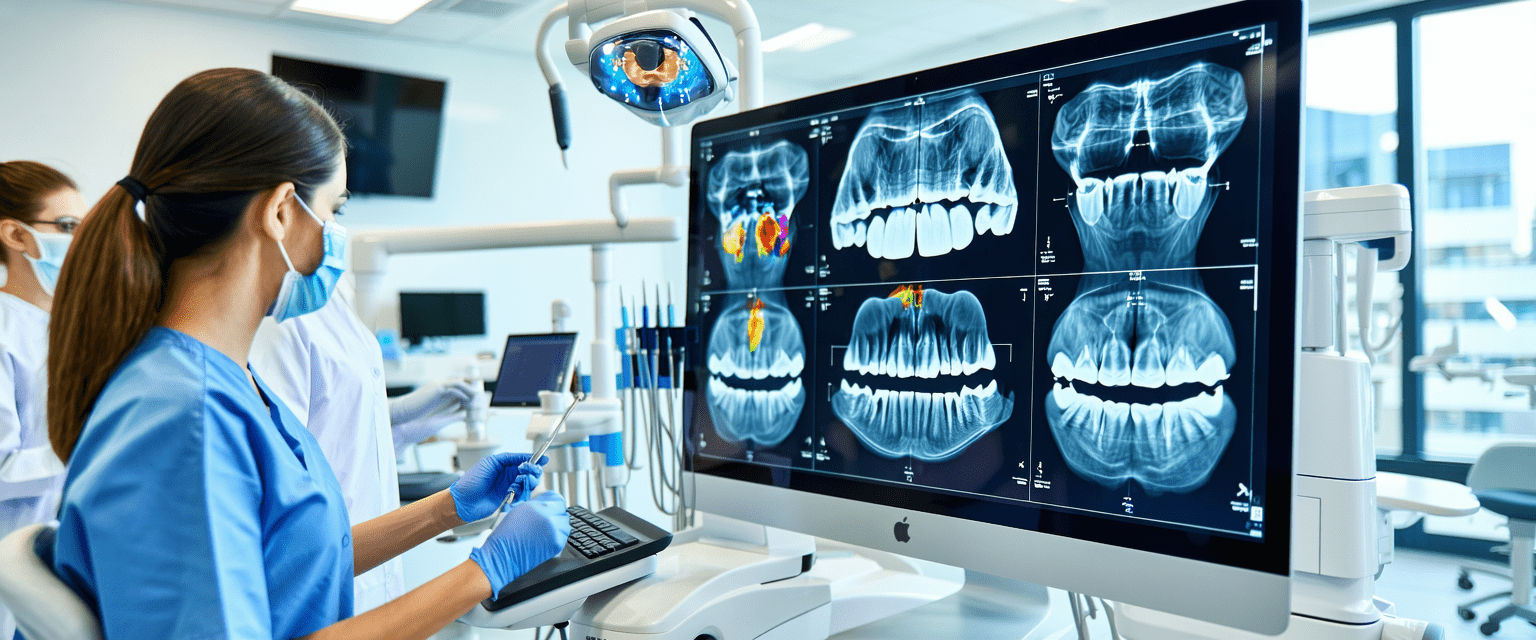
AI solutions that operate within your current imaging or practice management software eliminate the need to switch between multiple applications. Overjet’s FDA-cleared platform integrates directly with existing radiographic systems, displaying AI-detected pathology as visual overlays on images your team already reviews. This approach reduces the mental load of learning entirely new software. is FDA-cleared to detect and outline decay (cavities), quantify bone level measurements, detect calculus on radiographs, and enhance dental images (Overjet Earns FDA Clearance to Enhance Dental Images with AI). This approach reduces the mental load of learning entirely new software.
User Interface Usability and FDA Labeling
Clear design accelerates learning by making the gap between intention and action as small as possible. Color-coded annotations highlighting caries, calculus, or bone loss allow clinicians to quickly interpret AI findings without extensive training. FDA clearance also provides confidence that the technology meets rigorous clinical standards.
Leadership Support and Change Management
Practice owners who actively champion AI adoption and set aside dedicated training time see significantly faster team buy-in. When leadership frames AI as a tool that enhances clinical judgment rather than replaces it, staff members approach the technology with curiosity instead of resistance.
Typical Timeline From Onboarding to Proficiency
Most dental teams move through predictableDental teams typically progress through stages of AI adoption, progressing from initial exposure to independent use over roughly three months. This timeline varies based on practice size and team experience, but the general phases remain consistent, though timelines may vary depending on practice size, team experience, and training approaches. Timelines may vary depending on practice size, team experience, and training approaches.
Week 1 Kickoff and System Setup
Initial training sessions focus on system navigation, account access, and understanding the AI’s role in clinical decision-making. Your team learns where AI annotations appear, how to access reports, and what each visual indicator represents. Overjet’s onboarding process includes live demonstrations and hands-on practice with sample cases to build immediate familiarity.
Weeks 2-4 Guided Clinical Training
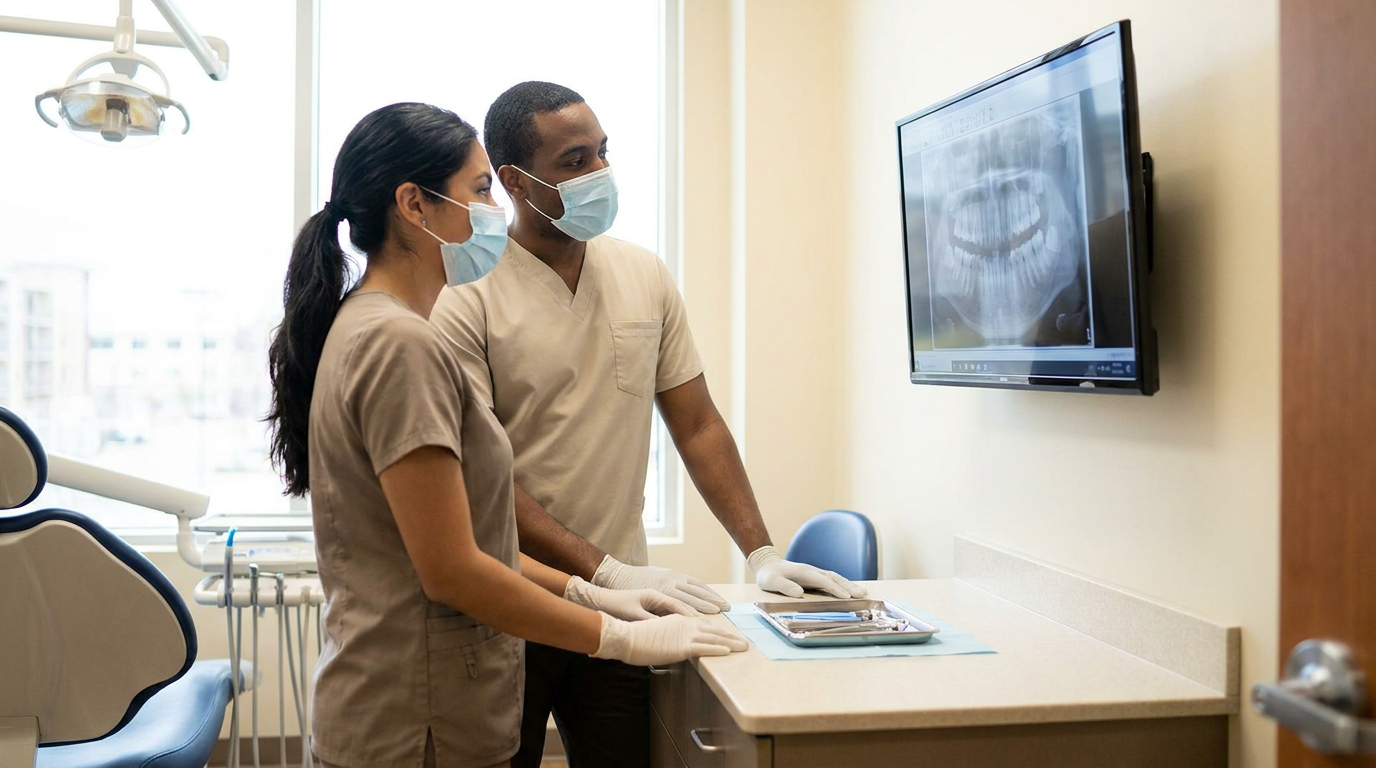
During this phase, clinicians use AI on actual patient cases while receiving real-time coaching from implementation specialists or designated practice champions. Dentists learn to correlate AI findings with clinical examination and radiographic interpretation, while hygienists discover how visual annotations enhance patient education conversations.
Month 2 Supervised Patient Cases
Your team operates more independently during month two, though periodic check-ins with vendor support or internal champions remain valuable. Clinicians start recognizing patterns in AI performance and understanding when the technology excels and when additional clinical judgment becomes particularly important.
Month 3 Autonomous Use and Optimization
By the third month, most teams achieve full proficiency and begin optimizing workflows for maximum efficiency. The technology becomes a natural part of daily operations rather than a conscious addition.
Roles and Responsibilities During Implementation
Successful AI adoption requires clear role definition across your practice team. Each position contributes unique expertise to the implementation process.
Dentist Clinical Champions
Dentists lead clinical validation by comparing AI findings against their diagnostic expertise and establishing protocols for AI-assisted treatment planning. They set the standard for how AI recommendations inform clinical decisions without overriding professional judgment. These champions also mentor other providers, sharing insights about when AI annotations prove most valuable.
Hygienist Power Users
Hygienists often become the most enthusiastic AI adopters because visual annotations transform patient education from abstract concepts into concrete, understandable evidence. They master imaging capture techniques that optimize AI performance and learn to present findings in ways that motivate patients toward preventive care.
Administrative and Insurance Teams
Administrative staff focus on AI features that streamline back-office operations, particularly insurance verification, prior authorization, and claim submission processes. Overjet’s platform automates many of these workflows, reducing manual data entry and accelerating reimbursement cycles.
IT and Vendor Support
Technical teams handle system integration, troubleshooting connectivity issues, and ensuring data security compliance. Overjet provides dedicated technical support throughout implementation, addressing HIPAA requirements, network configuration, and ongoing system maintenance.
Barriers Your Team May Face and How to Overcome Them
Even well-planned implementations encounter obstacles. Anticipating common barriers and preparing response strategies minimizes disruption.
Resistance to change: Natural hesitancy often stems from concern about job security or skepticism about technology’s clinical value. Involving skeptical team members early in the evaluation process allows them to experience benefits firsthand.
Data quality concerns: Questions about diagnostic accuracy typically arise during early adoption. Sharing validation studies, FDA clearance documentation, and peer-reviewed research demonstrating AI performance provides evidence-based reassurance.
Workflow disruption: Implementing AI gradually rather than attempting practice-wide adoption overnight allows you to refine the process before expanding. Starting with one operatory or a single provider identifies workflow adjustments before they impact the entire practice.
Regulatory and privacy questions: Addressing HIPAA compliance, data encryption standards, and patient consent requirements during initial training alleviates concerns about legal exposure.
Measuring Success: Clinical and Operational KPIs
Tracking specific metrics demonstrates AI’s impact and identifies areas requiring additional training or workflow adjustment. Establishing baseline measurements before implementation allows you to quantify improvements accurately.
Metrics in the following table are illustrative unless otherwise cited or directly sourced from Overjet documentation or published case studies.
KPI Category | Metric | What to Track |
Clinical Accuracy | AI-clinical concordance rate | How often AI findings align with your diagnoses |
Efficiency | Average chairtime per exam | Time spent on imaging analysis and documentation |
Patient Engagement | Case acceptance percentage | Treatment acceptance with vs. without AI visuals |
Revenue Cycle | Claim approval turnaround | Days from submission to approval |
Annotation Accuracy Rate
Monitoring how frequently AI findings align with your clinical diagnoses validates the technology’s reliability. High concordance rates confirm the system performs as expected, while discrepancies highlight opportunities for additional training. Overjet’s platform allows you to provide feedback on AI performance, continuously improving accuracy over time.
Chairtime Per Patient
Measuring efficiency gains from streamlined imaging analysis and automated documentation reveals how AI impacts your daily schedule. Most practices see chairtime reductions within the first two months as staff members learn to leverage AI annotations.
Case Acceptance Percentage
Tracking patient acceptance rates when using AI-enhanced visual communication compared to traditional explanation methods quantifies AI’s impact on treatment planning. The visual nature of AI annotations consistently improves treatment acceptance across diverse patient populations.
Claim Approval Turnaround
Monitoring insurance processing speed improvements from AI-automated prior authorizations and claim submissions reveals back-office efficiency gains. Overjet’s platform generates clinically detailed documentation that satisfies insurer requirements, reducing back-and-forth communication.
Training Approaches That Accelerate Mastery
Strategic training design significantly impacts how quickly your team achieves proficiency. Combining multiple educational methods addresses different learning styles and reinforces key concepts.
Microlearning modules: Short, focused sessions on specific features prevent cognitive overload and improve information retention. Five-minute videos demonstrating single tasks prove more effective than hour-long comprehensive tutorials.
Chairside coaching sessions: Real-time guidance during actual patient appointments builds practical skills faster than theoretical training. Coaches can address questions immediately and demonstrate how to handle unexpected scenarios.
Simulation cases and peer review: Practicing with sample cases allows team members to explore AI features without time pressure or patient care concerns. Group discussions of interesting cases foster collaborative learning.
Asynchronous e-learning: Self-paced online modules accommodate varying schedules and allow team members to revisit complex concepts as needed.
Evidence of Improved Diagnostic Accuracy Over Time
Clinical studies demonstrate that dental professionals using AI-assisted diagnosis detect pathology earlier and more consistently than those relying solely on traditional methods. This improvement stems from the technology serving as a systematic second opinion that catches findings human eyes might miss during busy clinical days.
Overjet is the only dental AI technology that is FDA-cleared to quantify bone level measurements, detect and outline decay (cavities), and detect calculus on radiographs (Overjet Expands Dental AI Detection Capabilities with New FDA Clearance).
Overjet’s FDA-cleared algorithms detect caries, calculus, and bone loss, providing a consistent baseline that supports rather than supplants clinical expertise. As your team gains experience interpreting AI findings alongside traditional diagnostic methods, diagnostic consistency improves across all providers.
Setting Your Team Up for Success With Overjet AI
Begin by identifying one or two clinical champions who demonstrate both technical aptitude and enthusiasm for innovation. These individuals will pilot the system, provide feedback, and eventually train their colleagues based on real-world experience.
Allocating dedicated training time rather than expecting staff to learn during regular clinical hours proves more effective. Even 30 minutes of focused, uninterrupted training provides more value than sporadic attempts to learn between patients. Overjet’s implementation specialists work with your schedule to provide training that minimizes disruption while maximizing engagement.
Setting realistic expectations about the learning timeline helps manage team expectations. Proficiency develops over weeks rather than days. Celebrating small wins maintains momentum and reinforces positive associations with the technology.
Finally, maintaining open communication with your Overjet support team throughout implementation allows you to address questions and challenges as they arise.
Ready to See Overjet's Dental AI in Action?
Frequently Asked Questions (FAQs)
How much does clinical training for dental AI typically cost?
Training costs vary by system complexity and team size, but most vendors include comprehensive onboarding in their implementation packages. Overjet provides dedicated training support as part of the adoption process.
Do hygienists require the same training depth as dentists?
Hygienists need focused training on patient education features and imaging capture, while dentists require deeper diagnostic interpretation skills. Role-specific training optimizes learning efficiency by concentrating on the features each position uses most frequently.
Can AI misdiagnosis risk increase during the early learning phase?
FDA-cleared AI systems like Overjet maintain consistent accuracy regardless of user experience level. The learning curve affects workflow efficiency and communication strategies, not diagnostic reliability.
How secure is cloud-based dental AI imaging?
Modern dental AI platforms use enterprise-grade encryption and HIPAA-compliant data handling. Cloud-based systems often provide better security than local storage solutions because they include automatic updates, redundant backups, and professional security monitoring.