
 Agent Ivy









Updated: September 2026
2021 is quickly becoming the "Year for AI in Dentistry." With impressive technologies emerging on both the clinical and technical sides, the relationship between clinicians and technicians should improve as a result, leading to better patient outcomes.
The basic premise of AI and machine learning starts and ends with predictability and reliability. Those are the same two factors clinicians and technicians strive for with every crown they prepare, impress, fabricate, and cement. Machine learning is a subset of AI that uses computational neural networks to learn from experience, similar to how the human brain operates.
Applications for AI
Applications include, but aren't limited to:
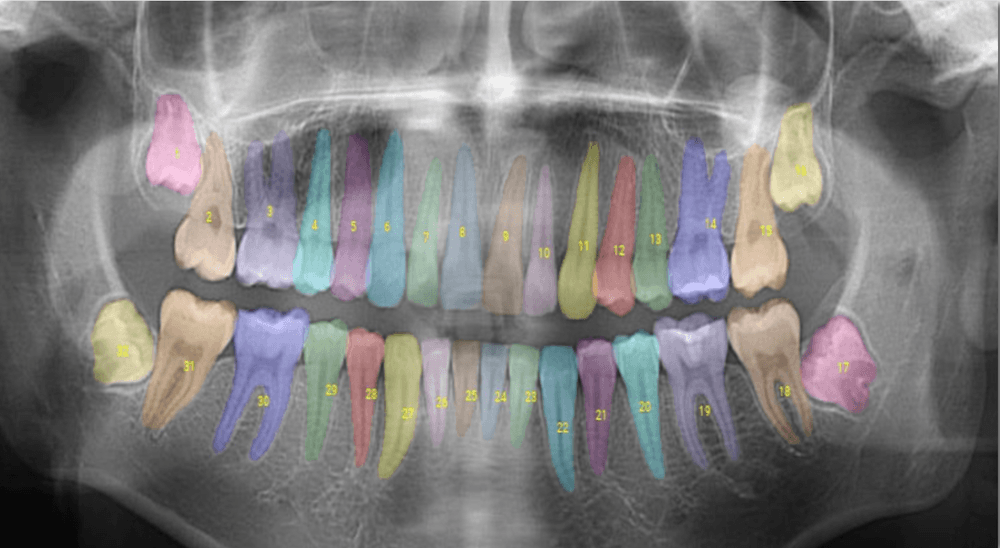
Treatment planning and disease screening, letting the clinician feel confident their prosthetic work is built on a sound, AI-verified foundation.
Impression taking and communication of marginal accuracy and preparation design for the chosen prosthetic material.
Fabrication of prosthetics, using algorithms to design esthetics based on facial shape, age, and patient-specific characteristics.
AI validation of marginal fit during insertion and finalization of the case in the mouth.
AI-supported color and shade communication from clinician to technician.
Current technologies
Several AI technologies are already available, and they keep learning and improving.
Sound treatment planning and clinical execution let technicians succeed with what they deliver. Advanced algorithms now rolling out to practices and laboratories can automatically provide comprehensive treatment proposals for cases that once required enormous manual effort and experience.
On margin detection and definition, many CAD/CAM programs and intraoral scanners have begun using AI to better define margins and preparation design. They can also alert clinicians to problem areas and the possible need for re-impression or re-preparation.
On the horizon
Using AI to analyze tooth color, internal characteristics, and morphology from photographs and 3D intraoral scans will be a genuine turning point in esthetics.
AI-supported spectrophotometry, done with the patient present, could map the whole tooth and both its intrinsic and extrinsic properties. That data could feed a ceramic printer capable of reproducing remarkable detail.
> "For each patient, each tooth, I am trying to mimic nature with my porcelain. At the moment, the analog way of doing this is very difficult to surpass, but a computational understanding of color and 3D printing of ceramics in the near future may be the key." — Master Dental Technician Yasu Kawabe
It's safe to say the AI boom in dentistry is only beginning. Its goal is to augment the work of clinicians and technicians, helping them do what they already do well, even better. The result is longer-lasting outcomes, more prosthetic predictability, and, ultimately, a highly satisfied patient.
It is safe to assume that the boom of AI in dentistry is only beginning
With respect to margin detection and definition, many CAD/CAM softwares and intraoral scanners have begun to utilize AI to better define margins and preparation design, and alert clinicians of problematic areas and the need for possible re-impression or preparation [4]. Utilizing this technology at the source—at the time of impression while the patient is present—will positively impact the technician as they will be receiving more accurate and clinically acceptable data. Clinicians sending analog impressions for indirect restorations will have laboratory scanners utilize AI to automatically detect margins, or lack thereof, and inform the clinician that an impression may need to be re-taken in order to produce the quality result the clinician and patient are expecting.
When a clinician seats a crown in the mouth, they expect the marginal fit to be accurate to several microns, and algorithms built to detect marginal discrepancies will alert a clinician prior to cementation.
On the Horizon
The ability to utilize AI algorithms to analyze tooth color, internal characteristics, and morphology from photography and 3D intraoral scans will serve as a true “game-changer” in the world of aesthetics. One of the most challenging aspects of a master technician’s job is matching a single-central incisor. Adequate shade selection requires copious amounts of skill, patience, and understanding from the technician, let alone the clinician, and many are at the mercy of their smartphone technology. A proper and often expensive camera, dual-flash setup, understanding of lighting, white balance, usage of a grey card, and polarizers are some of what goes into communicating shades effectively. Each step introduces inherent error and ultimately leads to very challenging situations that can result in remakes and patient dissatisfaction. The goal of the ceramist is to try to recreate nature. Enhancements in the AI interpretation of photographs, and the use of AI-enhanced spectrophotometry in-situ with the patient can allow for the entire tooth and both its intrinsic and extrinsic properties to be mapped and the data fed to a ceramic printer that would incorporate the incredible amount of detail that ceramists layer into their dental creation. Current attempts with multilayer blocks and pucks, and advancements in surface stains, are attempting to replace the laborious efforts of layering porcelain; however, the not-so-distant potential of printing ceramics could allow technicians to be more efficient with their time while still producing lifelike dental masterpieces for patients [5][6]. “For each patient, each tooth, I am trying to mimic nature with my porcelain,” Master Dental Technician Yasu Kawabe says. “At the moment, the analog way of doing this is very difficult to surpass, but a computational understanding of color and 3D printing of ceramics in the near future may be the key.”
It is safe to assume that the boom of AI in dentistry is only beginning and that its goal is to augment the work of clinicians and technicians and help them do what they already do well, better. The final result is longer-lasting outcomes, more prosthetic predictability, and ultimately a highly satisfied patient.